Electric Forklift Battery Performance and Operating Efficiency in Material Handling
Key Takeaways
- Maintenance standards
- Safe operation
- Field inspection guidelines
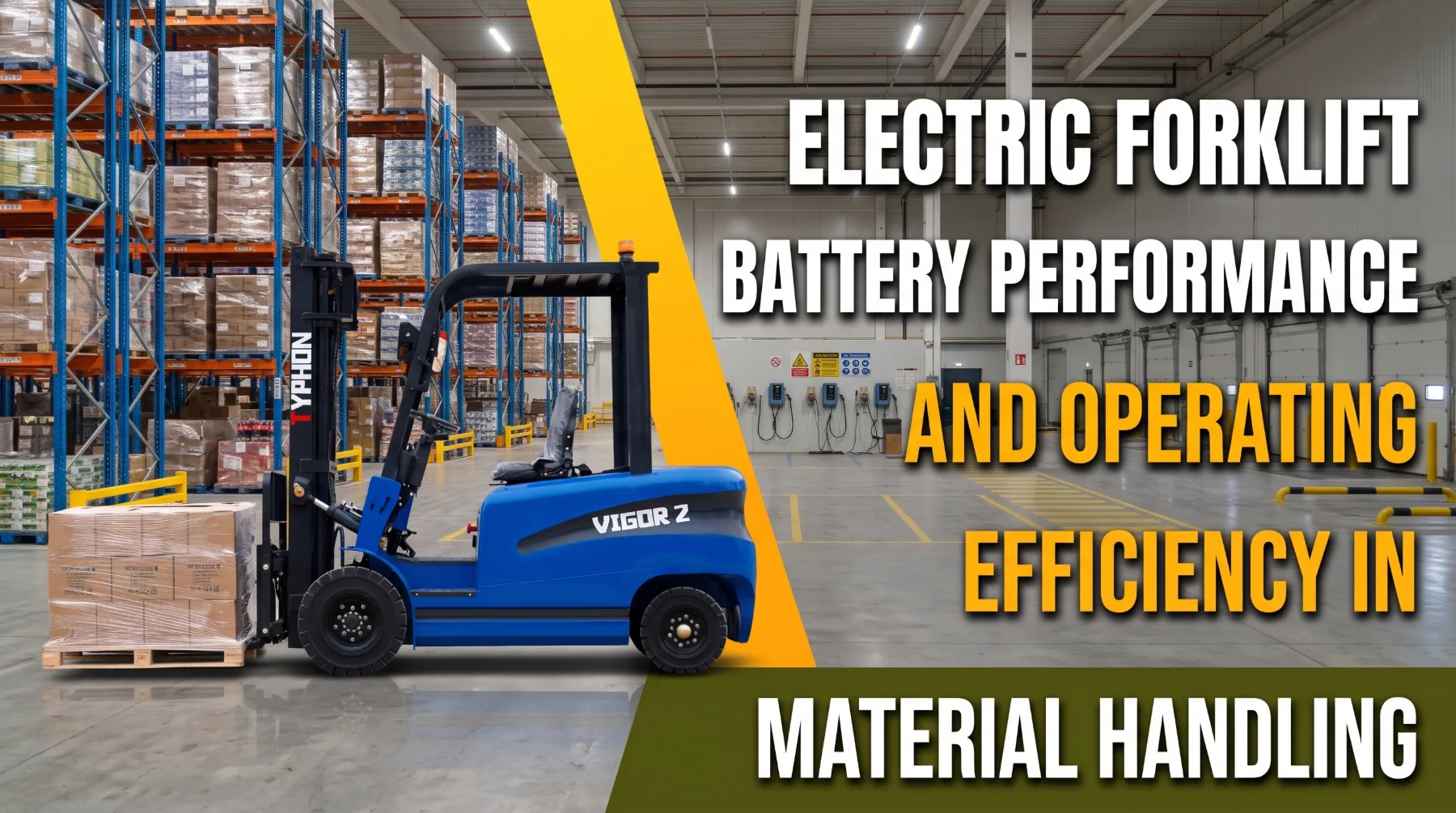
Battery performance is a major factor in the productivity of electric forklifts used in warehouses, distribution centers, manufacturing facilities, and cold storage environments. A properly sized and maintained battery supplies the energy needed for lifting, traveling, and other operating functions throughout a shift. Poor charging practices, unsuitable battery selection, excessive heat, and neglected maintenance can reduce operating time, interrupt material handling, and increase replacement costs.
For electric forklifts, battery efficiency depends on several connected factors, including capacity, voltage stability, energy demand, charging equipment, and operating conditions. Frequent heavy lifting, long travel distances, cold environments, and demanding multi-shift schedules can increase energy consumption and affect available run time. Matching batteries with compatible chargers, planning charging periods, and monitoring discharge levels help maintain consistent equipment availability.
Long-term battery reliability requires regular inspections and proper handling procedures. Trained personnel should follow the battery manufacturer's instructions for charging, cooling, watering where applicable, equalizing, connector cleaning, and corrosion checks. Monitoring battery temperature, charging cycles, discharge levels, and operating hours also helps identify performance changes early, improve energy efficiency, and extend service life. Forklift, battery, and charger manuals, along with applicable workplace safety requirements, should guide all operating and maintenance procedures.
Battery Capacity and Available Operating Energy
Chemistry shapes how capacity behaves in daily work. Flooded lead-acid batteries are the most common choice and cost less up front. They need regular watering and equalizing, along with careful charging and cooling schedules. Lithium-ion batteries cost more initially but usually need no watering. They tolerate opportunity charging and hold a more consistent voltage through the discharge cycle. Both chemistries can serve a fleet well when they're matched to the application and maintained correctly.
Battery weight plays a safety role that's easy to overlook. On counterbalanced forklifts, the battery is part of the truck's counterweight. The forklift's nameplate lists a minimum battery weight, and the truck's rated capacity depends on that weight. Never install a battery lighter than the minimum the nameplate specifies. That rule applies when switching chemistries, too, since some lithium-ion batteries are built with added ballast to meet weight requirements. Confirm compatibility with the forklift manufacturer before any battery change.
Sizing the battery to work starts with honest numbers. Compare battery specifications with your expected shift length, operating hours, and handling intensity. A battery that barely covers a light shift may fall short during peak season. Ask your dealer or battery provider to review your actual duty cycle before you buy or replace batteries.
Key takeaway: Battery capacity sets available energy, but usable capacity, chemistry, and the truck's minimum battery weight all matter, so size batteries to your real duty cycle and confirm compatibility before any change.
Travel and Lifting Energy Demand
Every task a forklift performs draws energy from the battery. Travel distance, load weight, lift height, acceleration, and how often the truck cycles all influence consumption. Lifting a heavy pallet to the top rack level demands far more energy than moving a light load across a smooth floor. Two identical trucks can show very different run times depending on the work they perform.
Lifting is among the most energy-intensive tasks and has a direct impact on overall lifting performance. Raising heavy loads to high rack levels requires the hydraulic pump motor to work hard for every lift. Holding a function against its stop, such as continuing to tilt after the mast reaches full tilt, forces oil across the relief valve. That wastes energy as heat without moving anything. Operators should release the controls once each movement is complete.
Travel patterns add up across a shift. Long travel routes, ramps, dock plates, and frequent starts and stops all raise energy use. Fast, aggressive acceleration and hard braking draw extra current and waste energy. Many modern electric trucks use regenerative braking or regenerative lowering, which return some energy to the battery. Some also offer performance modes that limit speed or acceleration to extend run time. Use those features as the manufacturer recommends.
Planning reduces demand before the truck moves. Slot fast-moving products in locations that limit travel and lift height, and keep travel aisles clear so operators can drive smoothly. Inspect tires for wear, damage, and debris, and report dragging brakes or unusual drive noise. Each of these issues increases resistance and drains the battery faster.
Data turns guesswork into planning. Record typical operating patterns, including loads handled, lift heights, travel distances, and hours in use. Telematics systems can capture much of this automatically. Those records help managers estimate battery requirements accurately and spot trucks that consume more energy than others doing similar work.
Safe load handling always comes first. Stay within the rated capacity shown on the truck's capacity plate, and account for the load center and any attachment. Travel with loads low and tilted back, and follow site speed limits. Operators should wear the seat belt where the truck is equipped with one, and only trained, authorized operators should drive any powered industrial truck.
Key takeaway: Heavy lifts, high racks, long routes, and aggressive driving all drain batteries faster, so encourage smooth operation, plan product locations, maintain tires and brakes, and track real operating patterns.
Voltage Stability and Performance Under Load
Voltage is the electrical pressure that drives current through the forklift's traction and hydraulic pump motors. When a truck accelerates or lifts a heavy load, current demand rises, and battery voltage dips temporarily. That dip is called voltage sag. A healthy battery recovers quickly. A weak or deeply discharged battery sags further and recovers more slowly, and the operator feels it as slower travel and lifting.
Lead-acid batteries lose voltage gradually as they discharge. Late in a shift, a lead-acid truck often lifts and travels more slowly than it did in the morning. Lithium-ion batteries hold a flatter voltage curve, so performance stays more consistent until the battery approaches its low limit. Understanding this difference helps managers set realistic expectations for each chemistry.
Electrical connections strongly affect delivered power. Corroded terminals, loose cable connections, damaged cables, and worn connectors all add resistance. Resistance turns energy into heat, reduces the voltage reaching the motors, and can damage connectors over time. A single weak cell in a lead-acid battery can also pull down the voltage of the whole battery. These problems often appear as unexplained slowdowns, early lift interrupt, or hot connectors.
Unusual performance changes deserve a proper diagnosis. Fault codes, sudden power loss, or inconsistent lift speeds should be investigated through the manufacturer's diagnostic and service procedures. Controllers, motors, and battery systems should be tested only by qualified technicians.
Key takeaway: Battery condition and clean, tight connections decide how steadily power reaches the motors, so never bypass lift interrupt, match voltage exactly, and have qualified technicians diagnose unusual performance changes.
Charging Infrastructure and Shift Planning
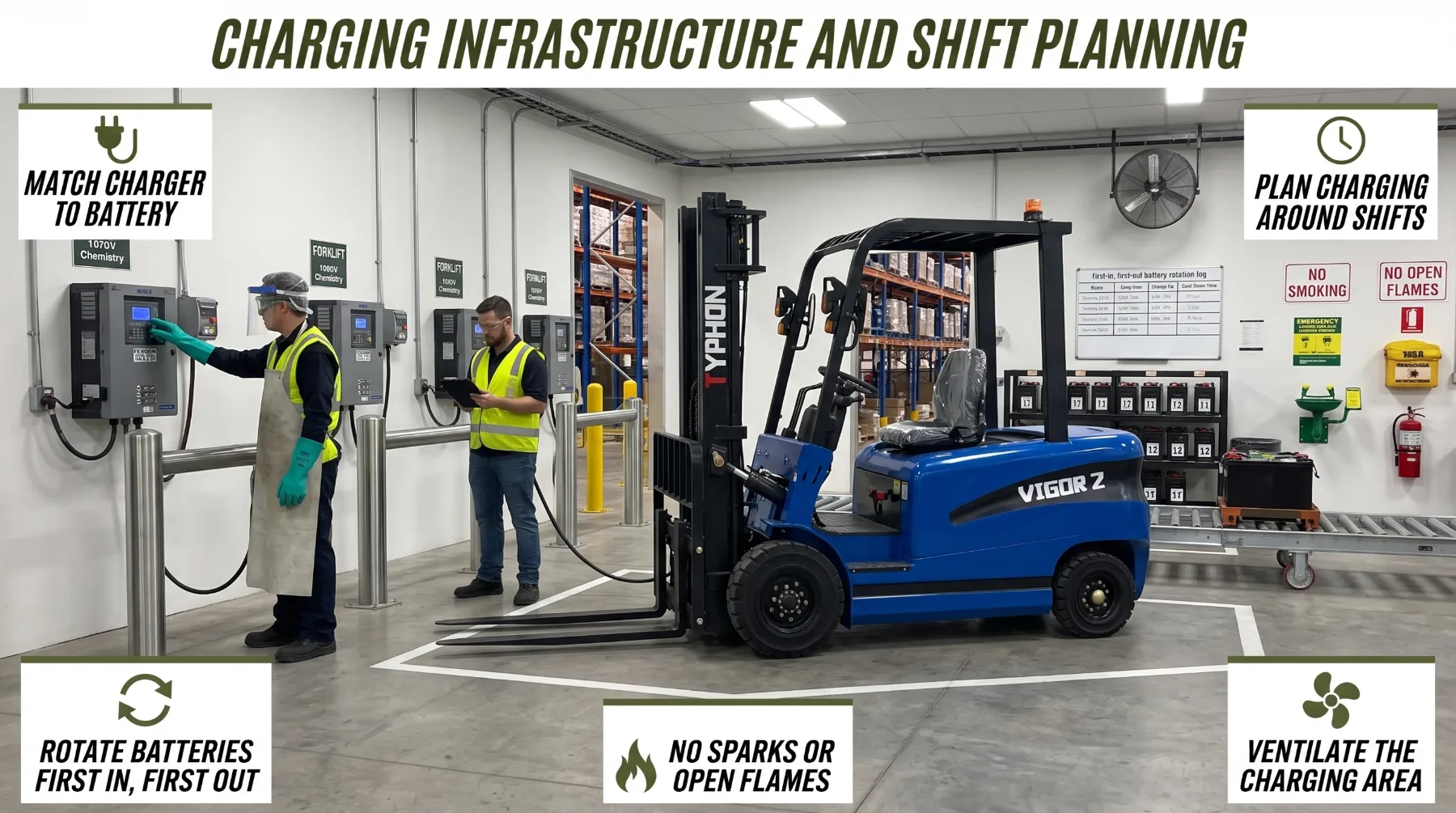
Charging strategy has to fit the battery chemistry, the charger, and the facility's shift schedule. Each approach suits different operations.
Conventional charging is common for lead-acid batteries. The battery typically works a full shift, charges for about eight hours, and then cools for several more hours before returning to service. Multi-shift operations using this method usually need spare batteries for each truck.
Opportunity charging tops up batteries during breaks and shift changes. Lithium-ion batteries handle this well. Lead-acid batteries need batteries and chargers specifically designed for opportunity charging.
Fast charging delivers higher charging current in shorter periods. It requires compatible batteries, chargers, and electrical infrastructure.
Charger compatibility is non-negotiable. The charger must match the battery's voltage, chemistry, and amp-hour capacity, and it should use the charging profile the battery manufacturer specifies. Lithium-ion chargers usually communicate directly with the battery's BMS. Using the wrong charger can undercharge or overcharge a battery, shorten its life, or create a safety hazard.
Rotation keeps the whole fleet healthy. In operations with spare batteries, use a first-in, first-out system so each battery receives a full charge and cooling period before reuse. Label batteries with identification numbers and log each charge. Without rotation, a few batteries take most of the work and wear out early, as the grocery distribution center discovered.
Hydrogen gas deserves serious attention with lead-acid batteries. Charging releases hydrogen, which is flammable and can ignite from a spark or flame. Prohibit smoking, open flames, and spark-producing work in the charging area, and post signs to that effect. Turn the charger off before connecting or disconnecting a battery to prevent arcing. Keep vent caps in place, and make sure the truck's key is off and the brake is set before charging.
Battery changing requires the right equipment. Lead-acid batteries can weigh well over a ton. Use the battery handling equipment the manufacturer specifies, such as roller beds, battery transfer carts, or an overhead hoist with an insulated spreader bar. Never lift a battery with improvised rigging. Keep metal tools and objects off the top of batteries, since they can short across terminals and cause burns, sparks, or explosions.
Key takeaway: Match each charger to the battery's voltage, chemistry, and capacity, plan charging around shift schedules, rotate batteries consistently, and set up charging areas that meet OSHA ventilation, flushing, and fire protection requirements.
Battery Temperature and Operating Environment
Heat builds during both discharge and charging. Lead-acid batteries warm up while charging, and starting a charge on a battery that's already hot adds further stress. Many battery manufacturers recommend letting batteries cool before charging and again before returning them to service. Some chargers include temperature compensation that adjusts the charge based on battery temperature. Monitor cell temperatures as the manufacturer directs, and investigate any battery that runs noticeably hotter than others.
Cold storage creates special demands. Freezer and cooler applications often call for batteries designed for cold operation, along with trucks equipped for low temperatures. Moving a truck repeatedly between a freezer and a warm dock can cause condensation on the battery and electrical components, which may lead to corrosion and electrical faults. Lithium-ion batteries in cold environments may rely on built-in heating, and their BMS may limit charging at low temperatures. Follow the battery manufacturer's limits for operating and charging temperatures.
Charging areas need suitable conditions, too. Keep them ventilated, dry, and within the temperature range the battery and charger manufacturers recommend. Avoid placing chargers near heaters, direct sunlight through dock doors, or areas where water collects. Good airflow also helps disperse hydrogen gas from lead-acid charging.
Dust, moisture, and debris affect battery health as well. Dirt and spilled electrolyte on a battery top can create stray current paths that slowly drain charge and corrode connectors. Washdown areas, outdoor yards, and dusty production floors call for more frequent cleaning and inspection. Follow the manufacturer's guidance for cleaning, and never hose down a battery or charger unless the manufacturer specifically approves it.
Key takeaway: Cold reduces available capacity and heat shortens battery life, so choose batteries suited to the environment, allow proper cooling, follow the manufacturer's temperature limits, and keep charging areas dry and ventilated.
Maintenance and Energy Efficiency Monitoring
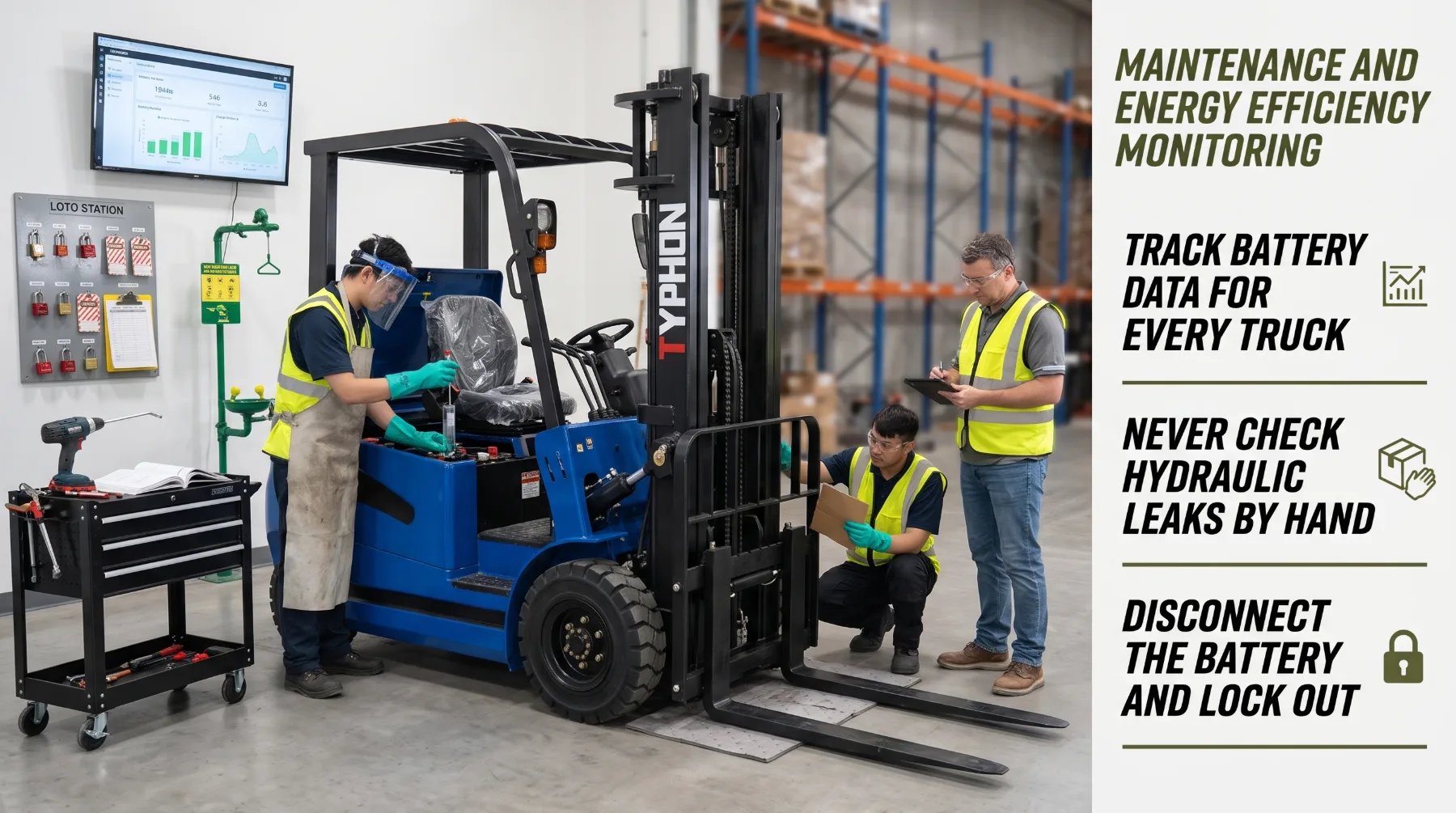
Consistent maintenance protects battery life and keeps forklifts available when demand peaks. Flooded lead-acid batteries need regular care to perform as designed. Add water after charging, not before, unless the plates are exposed, and use the distilled or deionized water the manufacturer specifies. Overfilling causes electrolyte to overflow during charging, which leads to corrosion and lost capacity. Many fleets use single-point watering systems to make the task faster and more accurate.
Equalizing charges help keep lead-acid cells balanced. An equalized charge is a controlled overcharge that brings all cells to a similar state, typically performed weekly or as the manufacturer directs. Trained staff can take periodic specific gravity readings with a hydrometer and record cell voltages to spot weak cells early. Keep the battery top clean and dry, using a neutralizing solution as the manufacturer recommends.
Lithium-ion batteries need less routine care, but they still need attention. Inspect cables, connectors, and the battery case for damage. Respond promptly to BMS alerts and fault codes, and keep battery software current as the manufacturer recommends. Any lithium-ion battery that is swollen, damaged, overheating, or giving off odor or smoke should be removed from service and isolated according to the manufacturer's emergency procedure. Contact the manufacturer before handling it further.
Connections and cables deserve attention on every battery. Check connectors for corrosion, cracked housings, burned or loose contacts, and damaged cables. Inspect cell connectors and terminals on lead-acid batteries for tightness and corrosion. Replace damaged components with the correct parts rather than taping or improvising repairs.
Monitoring turns maintenance into energy savings. Track charging duration, operating hours, discharge levels, cycle counts, and fault history for every battery. Telematics and battery monitoring systems can collect much of this data automatically. Over time, the records reveal batteries losing capacity, trucks using more energy than similar units, and shifts where charging falls behind. They also support accurate replacement planning instead of emergency purchases.
Safe Battery and Truck Service
Hydraulic leak checks must be done safely on every forklift. Never use your hand to search for a hydraulic leak around the lift cylinders, tilt cylinders, mast hoses, or fittings. Fluid escaping through a pinhole under pressure can penetrate skin and cause an injection injury. The wound may look like a minor puncture at first, but it's a medical emergency that requires immediate surgical treatment. Hold a piece of cardboard or wood near the suspected leak point, wear gloves and eye protection, and keep your face and body out of line with the fitting. If anyone is struck by escaping fluid, get emergency medical care at once and tell medical staff it's a hydraulic injection injury.
Battery work calls for specific protective equipment. When watering, testing, or handling lead-acid batteries, wear chemical splash goggles and a face shield, acid-resistant gloves, and an acid-resistant apron. Remove rings, watches, and other metal jewelry, since they can short across terminals and cause severe burns. Keep eyewash and drench facilities accessible and working. If electrolyte contacts the eyes or skin, flush immediately with large amounts of water and seek medical attention.
Carbon monoxide is an important part of the fleet safety picture. Electric forklifts produce no exhaust, which is one reason many facilities choose them for indoor work. Many operations still run mixed fleets that include propane, gasoline, or diesel trucks, and those engines produce carbon monoxide. This colorless, odorless gas can build to dangerous levels quickly in trailers, freezers, and poorly ventilated areas. Where internal combustion trucks operate indoors, keep engines properly tuned, ensure adequate ventilation, and monitor CO levels. If anyone feels headache, dizziness, nausea, or confusion, move everyone to fresh air and get emergency medical help.
Key takeaway: Water and equalize lead-acid batteries correctly, inspect connections and cables, track energy data for every battery, check leaks with cardboard rather than your hands, wear proper battery PPE, and complete a full lockout before any service.
Conclusion
Electric forklift battery performance directly shapes runtime, handling consistency, and daily warehouse productivity. Capacity sets the energy available, while lifting, travel, and operator habits decide how quickly that energy is used. Voltage stability and clean connections determine how steadily power reaches the motors. Charging strategy, rotation, and temperature control decide how well batteries recover between shifts and how long they last.
Operations that treat batteries as a managed asset rather than an afterthought get the most dependable results. Size batteries to your real duty cycle, match chargers precisely, and rotate batteries consistently. Respect lift interrupt and temperature limits, and track energy use for every truck. Back those habits with trained battery staff, OSHA-compliant charging areas, cardboard leak checks, proper PPE, and full lockout before service. That disciplined approach keeps your fleet moving through every peak season, protects your investment, and sends every team member home safely.
Frequently Asked Questions
What affects electric forklift battery performance?
Battery capacity, chemistry, age, and condition all play a role, along with operating load, lift height, travel distance, and driving habits. Temperature, charging practices, and the condition of cables and connectors also influence how much energy reaches the truck and how long the battery lasts.
Does heavy lifting use more battery energy?
Yes. Lifting heavy loads, especially to high rack levels, demands significant energy from the hydraulic pump motor. Holding hydraulic functions against their stops also wastes energy as heat. Smooth operation and efficient product placement help reduce consumption.
Why is charger compatibility important?
The charger must match the battery's voltage, chemistry, and amp-hour capacity, and it should use the charging profile the manufacturer specifies. A mismatched charger can undercharge or overcharge the battery, shorten its life, and create safety hazards.
How can warehouses improve battery efficiency?
Follow approved charging and cooling procedures, rotate batteries consistently, and keep connections clean and tight. Water and equalize lead-acid batteries on schedule. Monitor run time, discharge levels, and charging data, and plan equipment use around actual operating demand.