Excavator Boom Swing Angle & House Swing Differences
By Machinery Team |
Published: September 10, 2026 |
Category: Equipment Guide
| 5 min read
Boom Swing Angle vs. House Swing: Understanding Excavator Movement
Operators often use the words "swing" and "movement" loosely when describing what an excavator can do, yet the machine actually performs two very different kinds of motion. One shifts the boom to the side. The other rotates the entire upper body of the machine. Knowing the difference between boom swing angle and house swing helps you work faster, dig more precisely, and stay confident in tight or demanding conditions. Each movement has its own purpose, and the best operators know exactly when to call on each. This guide breaks down what both movements mean, how they work together, and why they matter for real work on site.
What [Boom Swing](https://americanforklift.org/what-does-boom-swing-do-on-a-mini-excavator-and-why-does-it-matter/) Angle Means on an [Excavator](https://happymachinery.com/store)
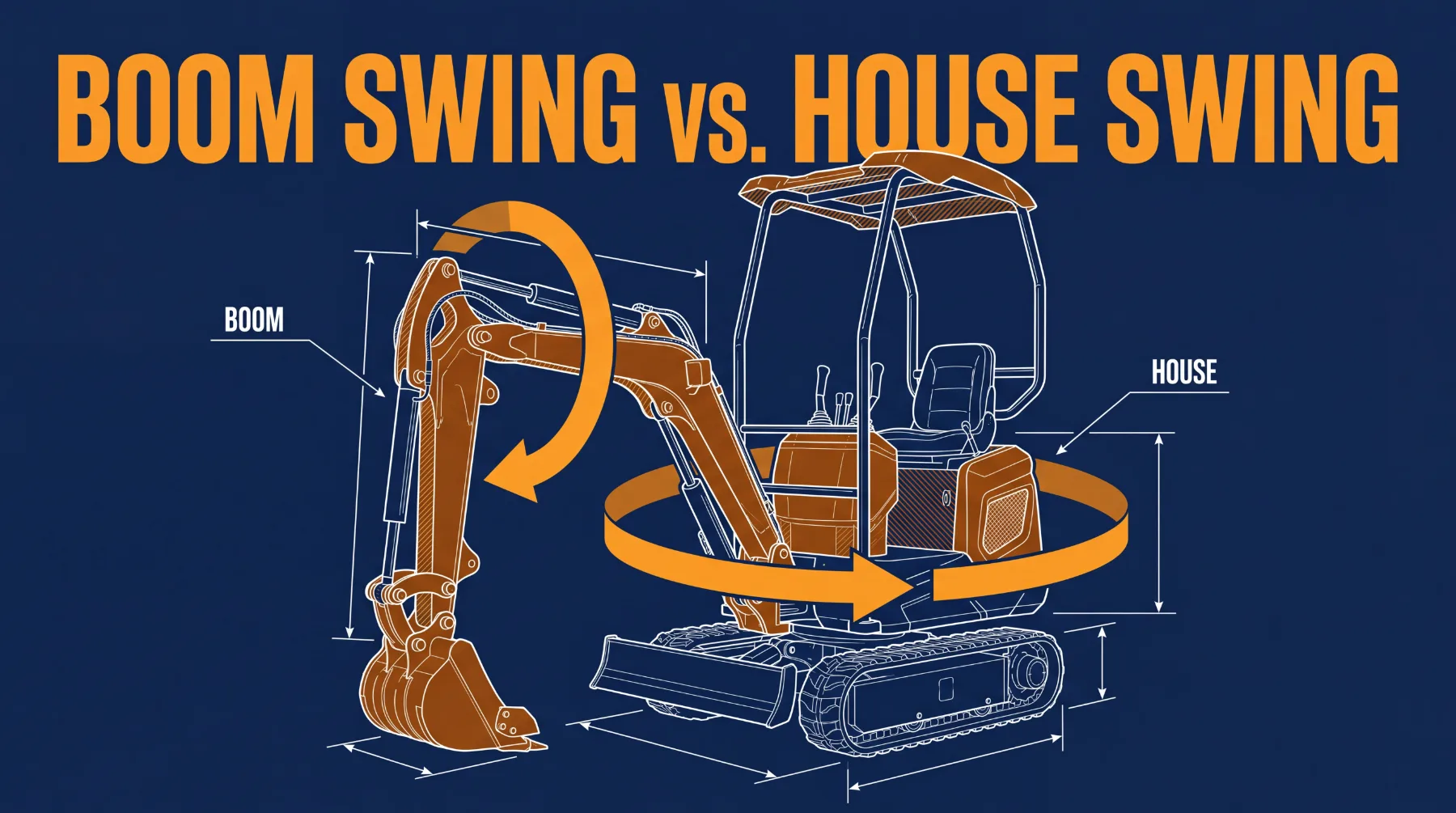
Boom swing angle describes how far the boom can move from side to side relative to the excavator's main body. Instead of keeping the boom fixed straight ahead, the machine allows it to pivot left or right at its base, changing the boom's position without turning the whole upper structure. This gives the operator a way to shift the digging line sideways while the tracks and body stay put, which is a valuable capability when working around obstacles.
The real strength of boom swing angle shows up when digging beside walls, foundations, curbs, and other structures. By angling the boom, the operator can line up the bucket parallel to a wall or dig a trench right alongside a foundation without having to reposition the machine. This makes close-quarters work far more manageable, since the operator adjusts the boom rather than maneuvering the entire excavator into an awkward position.
Boom swing angle matters in several practical situations:
Trenching along walls where the bucket needs to stay parallel to a fixed surface.
Digging beside foundations without the tracks having to sit at an angle.
Working around obstacles such as posts, curbs, and existing structures.
A machine with a generous boom swing range gives the operator more flexibility to position the digging equipment precisely. This is especially useful on confined or complex sites, where obstacles limit how the machine can be placed. When the boom can swing to the side on its own, the operator gains the freedom to dig exactly where the job requires, keeping work accurate and efficient even when space is tight and structures crowd the digging area.
What House Swing Means on an Excavator
House swing refers to the rotation of the excavator's entire upper structure around its slew ring, or center pin. When the machine performs a house swing, the cab, engine, counterweight, and working equipment all rotate together as one unit on top of the undercarriage. This is the large, sweeping rotation most people picture when they think of an excavator turning to move material from one place to another.
The slew ring is what makes this motion possible. It sits between the upper structure and the tracks, allowing the whole top half of the machine to spin while the undercarriage stays planted. Because the cab and all the working equipment turn together, the operator keeps a consistent view of the bucket and the work throughout the rotation. This unified movement is central to how an excavator carries out its core tasks.
House swing supports the machine's most fundamental cycle. Consider what it enables:
Digging by positioning the boom and bucket toward the excavation area.
Loading by rotating from the dig point to a waiting truck or spoil pile.
Material placement by turning to set material down precisely where it is needed.
Without house swing, an excavator would be limited to digging only directly in front of itself. The ability to rotate the upper structure a full turn transforms the machine into a versatile tool that can dig in one spot and deposit material in another without moving the tracks. A smooth, responsive house swing is therefore a defining feature of a capable excavator, letting the operator move through the dig-and-dump cycle efficiently while keeping the machine stable and the work well within reach.
How Boom Swing and House Swing Work Together
Independent boom swing allows trenching tight against building foundations without house rotation.
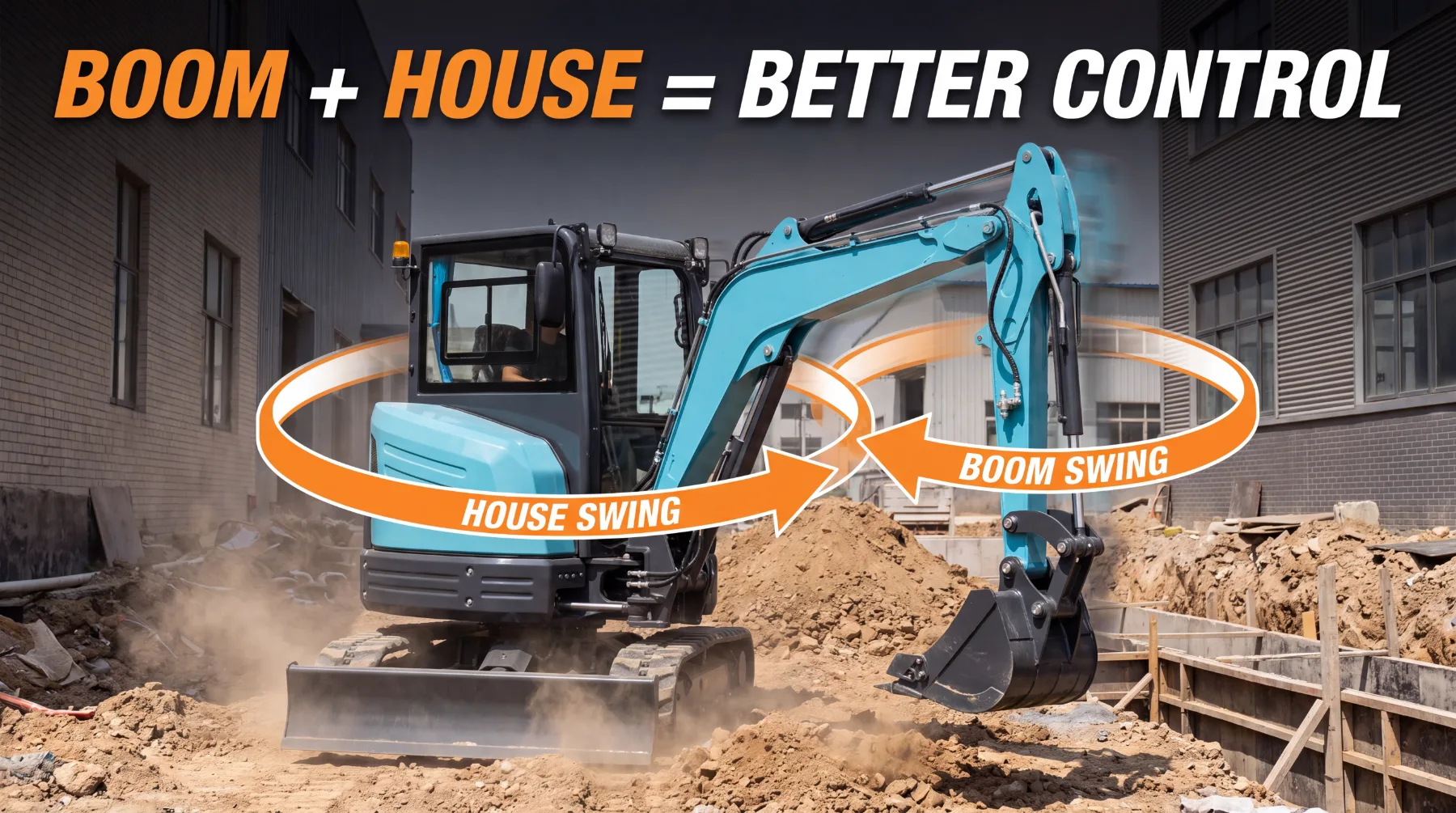
Boom swing and house swing are distinct movements, and understanding how they differ is the key to using them well. Boom swing changes the position of the boom relative to the body, pivoting it left or right at its base. House swing, by contrast, rotates the entire upper structure, taking the cab, engine, counterweight, and working equipment around together. One moves just the boom, while the other moves everything on top of the tracks.
Recognizing this difference helps an operator choose the right movement for each task, especially in confined areas. When the job calls for a large change in direction, such as turning from a trench to a spoil pile, house swing is the natural choice because it repositions the whole working equipment in one motion. When the job calls for a small sideways adjustment to line up beside a wall or clear an obstacle, boom swing does the work without disturbing the machine's overall orientation.
The two movements often complement each other on the same job. An operator might use house swing to rotate broadly toward the digging area, then apply a boom swing to fine-tune the bucket's position alongside a foundation. This combination lets the machine handle complex layouts with precision, adapting to obstacles and tight boundaries that a single movement alone could not manage. Knowing when to rely on each keeps the work smooth and reduces the need to constantly reposition the tracks.
For operators working in restricted spaces, this understanding is genuinely practical. House swing delivers the reach and rotation for the main cycle, while boom swing offers the fine, sideways flexibility that close work demands. Used together with intent, they let an excavator work accurately and efficiently in conditions where space is limited and precision matters most.
Why Boom Swing Angle Matters in Tight Spaces
Tight spaces test an excavator more than open ground ever will, and this is exactly where the boom swing angle proves its value. A wider boom swing range gives the machine greater flexibility to dig close to structures without repositioning the tracks. Rather than shuffling the undercarriage back and forth to line up each cut, the operator simply swings the boom to the side, keeping the machine stable while adjusting where the bucket digs.
This capability is particularly useful for trenching along walls, curbs, and buildings. When a trench must run parallel to a fixed structure, the boom can angle to keep the bucket aligned with that surface throughout the dig. The operator maintains a clean, straight trench line without the machine having to sit at an awkward angle or move repeatedly to follow the wall. That saves time and keeps the excavation accurate where precision matters most.
The advantages of a strong boom swing range in confined conditions are clear:
Fewer track repositioning moves, which keeps work faster and less disruptive.
Accurate digging beside structures where the bucket must stay parallel to a fixed surface.
Greater reach into offset positions that would otherwise require moving the whole machine.
Working close to buildings, along curbs, or beside existing utilities often leaves little room to maneuver. In these conditions, an excavator that can angle its boom brings a real practical benefit, letting the operator reach into positions that would be difficult or impossible with a fixed boom. This flexibility keeps the machine productive on sites where obstacles crowd the work area, and it reduces the physical effort of constantly repositioning. For any operator who regularly digs in confined spaces, a capable boom swing range makes demanding work more manageable and more precise.
How House Swing Affects Excavator Working Range
Combining zero tail swing with boom offset delivers unmatched tight-space digging agility.
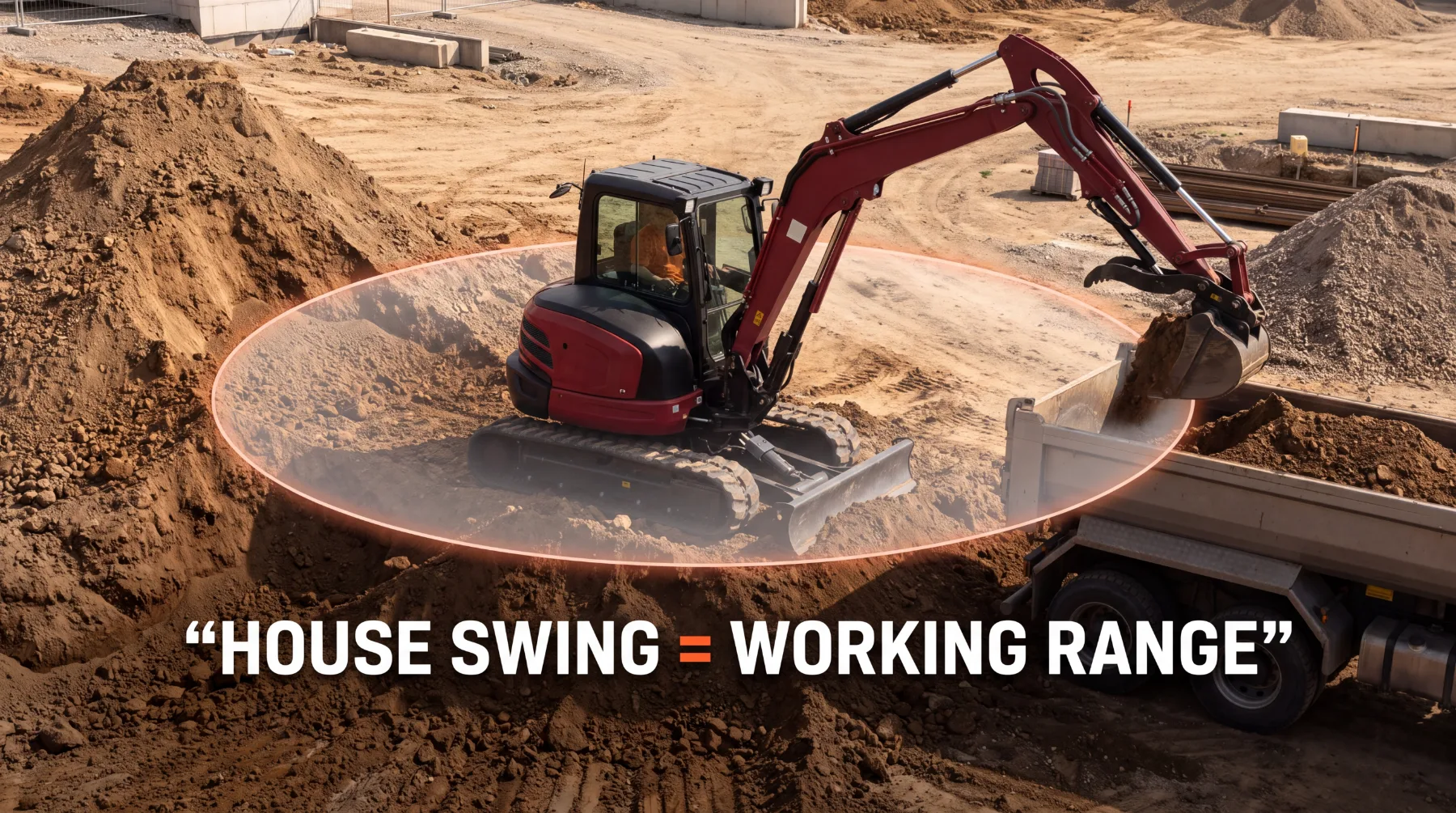
House swing plays a defining role in how much an excavator can accomplish from a single position, because it determines how the machine rotates between the digging and dumping areas. Once the tracks are set, the upper structure can turn to reach a wide arc around the machine, letting the operator dig in one direction and deposit material in another without moving the undercarriage. This rotational reach is what gives an excavator its productive working range.
The efficiency of the dig-and-dump cycle depends heavily on how well the swing system performs. In a typical cycle, the operator digs, swings to a truck or spoil pile, releases the material, and swings back to dig again. This rotation repeats hundreds of times over a working day, so the smoothness and speed of the house swing have a direct effect on how much work the machine completes. A well-designed swing system moves the upper structure fluidly between work positions, keeping each cycle short and controlled.
A capable house swing supports productivity in several ways. It lets the operator position the machine so that both the dig point and the dump point fall within a comfortable rotation, reducing the need to reposition the tracks. It also delivers smooth acceleration and stopping, so the load stays controlled and the bucket arrives precisely where it needs to be. When the swing is responsive and steady, the operator can maintain a consistent rhythm through the cycle, which adds up to more material moved over the course of a shift.
A well-engineered swing system turns rotation into genuine efficiency. By allowing smooth, predictable movement between digging and dumping, house swing helps the excavator make the most of every position, keeping the work steady, accurate, and productive throughout the day.
Conclusion
Boom swing angle and house swing are two separate movements that together define how an excavator works. Boom swing shifts the boom to the side for precise digging beside walls, foundations, and curbs, while house swing rotates the entire upper structure to move material between the digging and dumping areas. Understanding the difference helps operators choose the right movement for each task, work more accurately in tight spaces, and keep the dig-and-dump cycle running smoothly. A machine with a capable boom swing range handles confined sites with confidence, and a well-designed swing system turns rotation into real productivity. When you understand both movements and use them with intent, you get the most from your excavator on every job, whether the work is close and precise or broad and demanding.
Frequently Asked Questions
1. What is the difference between boom swing angle and house swing?
Boom swing angle and house swing describe two different movements. Boom swing angle is how far the boom can pivot from side to side at its base, relative to the machine's main body. It changes the position of the boom without turning the rest of the machine. House swing, by contrast, is the rotation of the entire upper structure around the slew ring, which takes the cab, engine, counterweight, and working equipment around together. In short, boom swing moves only the boom for fine sideways adjustments, while house swing rotates everything on top of the tracks for the main digging and dumping cycle. Knowing which to use helps operators work efficiently.
2. When should an operator use boom swing instead of house swing?
Boom swing is best for small sideways adjustments, especially when digging close to a wall, foundation, curb, or other structure. By angling the boom, the operator can keep the bucket parallel to a fixed surface or reach an offset position without moving the tracks or turning the whole machine. House swing is the right choice for larger changes in direction, such as rotating from a trench to a waiting truck or spoil pile. In practice, operators often combine the two, using house swing to rotate broadly toward the work and boom swing to fine-tune the bucket's position. Matching the movement to the task keeps work precise and efficient.
3. Why does boom swing angle matter when working in tight spaces?
Boom swing angle matters in tight spaces because it lets the excavator dig close to structures without repositioning the tracks. A wider boom swing range gives the operator flexibility to angle the boom and line up the bucket beside walls, curbs, and buildings, keeping the machine stable while adjusting where it digs. This is especially valuable for trenching parallel to a fixed surface, since the boom can stay aligned with the wall throughout the cut. The result is fewer track repositioning moves, more accurate digging, and greater reach into offset positions. On confined or crowded sites, this flexibility makes demanding work faster, more precise, and less physically taxing.
4. How does house swing affect an excavator's productivity?
House swing has a direct effect on productivity because it determines how the machine rotates between the digging and dumping areas from a single position. In a typical cycle, the operator digs, swings to a truck or pile, releases the material, and swings back to dig again, repeating this hundreds of times a day. The smoothness and speed of the house swing therefore shape how much work the machine completes. A well-designed swing system moves the upper structure fluidly, delivers controlled acceleration and stopping, and keeps each cycle short. When the swing is responsive and steady, the operator maintains a consistent rhythm, which adds up to more material moved over a shift.
5. What is the slew ring and why is it important?
The slew ring, sometimes called the center pin area, is the component that sits between the excavator's upper structure and its undercarriage, allowing the top half of the machine to rotate. It is what makes house swing possible, letting the cab, engine, counterweight, and working equipment turn together while the tracks stay planted. This is essential because it lets the excavator dig in one direction and deposit material in another without moving the undercarriage. A smooth, well-functioning slew ring supports the entire dig-and-dump cycle, keeping the upper structure stable and the rotation controlled. Because it carries the load of the whole upper structure, its condition is central to reliable, efficient operation.