High-Tipping Dumper Applications for Skip Loading and Material Transfer
Key Takeaways
- Maintenance standards
- Safe operation
- Field inspection guidelines
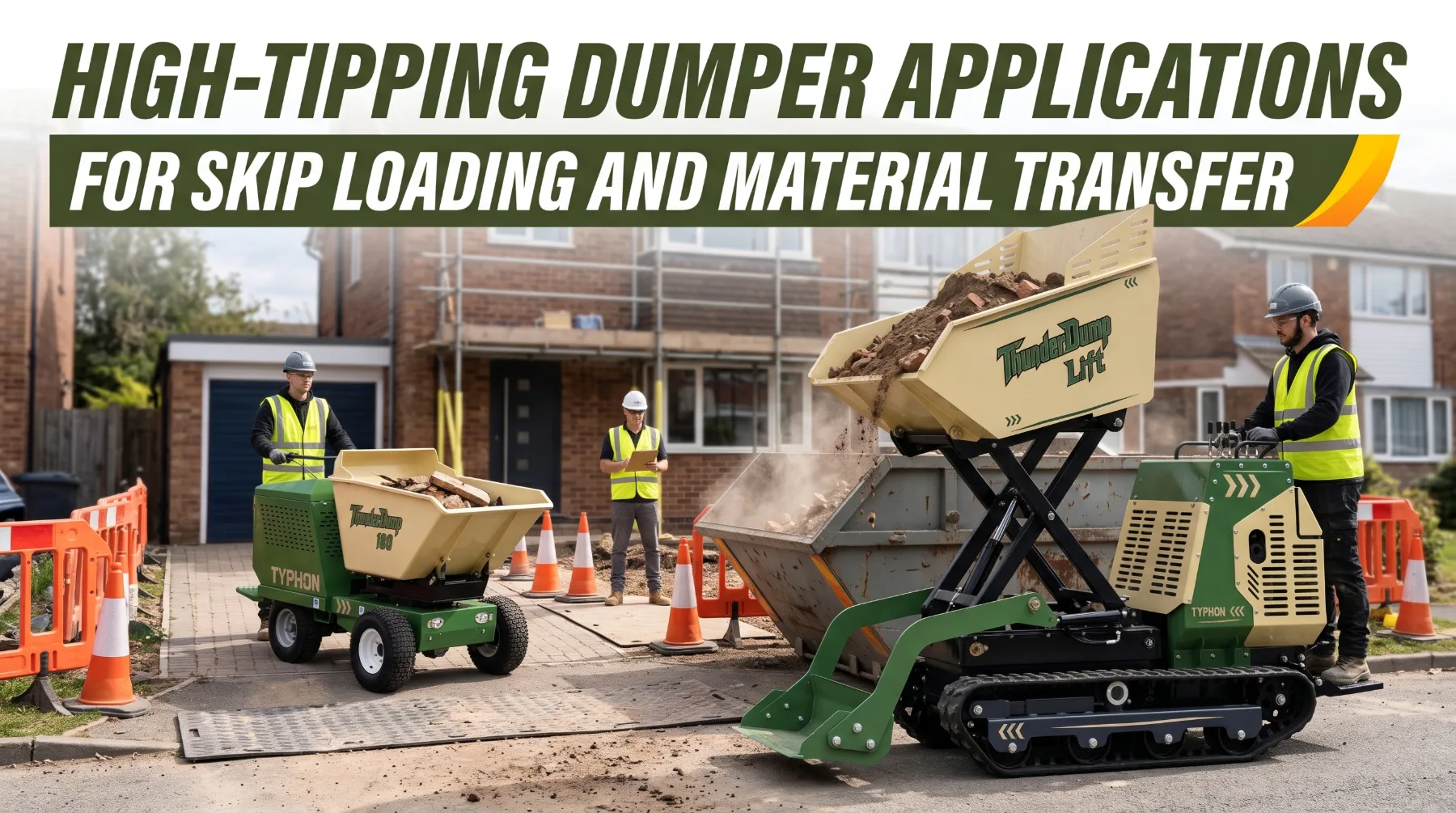
A renovation contractor is converting a garage into a ground-floor apartment on a narrow city lot. The work produces a steady flow of broken slab, brick, and soil, and a 6-yard skip sits at the curb. The crew rents a compact tracked high-tip dumper to move debris from the back of the property to the skip. On paper, the machine's discharge height clears the skip wall by several inches. On the first load, the operator stops on the sloped edge of the driveway, a few feet short of the container. The front of the machine sits lower than the rear, and the bed is heaped with wet soil and concrete well beyond the rated payload. As the lift frame rises, the dumper rocks forward and the load shifts toward one side. The operator lowers the bed at once. A third of the material spills down the outside of the skip and across the sidewalk. Nobody is hurt, but the crew spends the next hour shoveling debris and cleaning the pavement. The machine was suitable for the job. Its positioning, loading, and setup were not.
High-tipping dumpers raise their bed to a greater discharge height than standard tipping machines. That added height lets contractors place soil, rubble, aggregate, and construction waste directly into skips, roll-off containers, hoppers, and other elevated receiving points. The benefit is real: less double handling, fewer machines on site, and faster material transfer on tight jobs. The risks are real too. Lifting a loaded bed high above the ground changes the machine's stability, increases demands on the hydraulic system, and raises the stakes of every positioning decision. This guide explains how high-tip dumpers work, how to match them to your containers and materials, and how to operate and maintain them safely.
A standard compact dumper tips its bed forward or to the side around a pivot near the chassis. The bed rotates, and material slides out close to ground level. That works well for ground piles, trenches, and spreading material. A high-tipping dumper adds a lifting stage. A hydraulic system first raises the entire bed vertically, or along a short arc, to an elevated position. Then it tips the bed to discharge. The result is a discharge point high enough to clear the walls of a skip or container instead of dropping material beside it.
Several designs achieve this. Many compact tracked high-tip dumpers use a vertical lift frame or mast, with one or more hydraulic cylinders raising the bed straight up before a tipping cylinder rotates it forward. Others use a pivoting arm linkage that lifts and moves the bed forward in a single arc, which can add reach over the container rim. Swivel high-tip models combine vertical lift with a rotating bed, so the operator can discharge to the side without turning the whole machine. Some machines are self-loading, with a bucket or shovel built into the bed that scoops material from a pile, then lifts and tips into a container. Walk-behind tracked high-tip models, sometimes called power barrows, serve the tightest access routes, while ride-on models carry larger payloads over longer distances.
The hydraulic system does all the heavy lifting in every design. An engine-driven pump supplies pressurized oil to the lift and tip cylinders through a control valve. Most machines include load-holding or check valves that help keep the bed in position if a control is released or a hose fails. Those valves are safety devices, but they don't replace safe procedures. The bed can still settle or drop if a component fails, which is why no one should ever stand or reach beneath a raised bed.
Those advantages come with a trade-off. Every time a loaded bed rises, the machine's combined center of gravity moves upward and, on many designs, forward. A high-tip dumper is at its least stable when the bed is fully raised. Treat the lifting stage as the most critical part of the cycle and plan around it.
Key takeaway: High-tip dumpers use hydraulic lift and tip cylinders to raise the bed before discharging, so material can go directly into elevated containers. Understand which lift design your machine uses, and treat the raised-bed position as its least stable point.
Compare Skip and Container Height
A high-tip dumper only saves time when its discharge point clears the receiving container with room to spare. Matching the two takes accurate measurement on site and a clear understanding of how the manufacturer defines discharge height and tipping geometry. A difference of a few inches decides whether material lands cleanly in the container or slides down its outside wall.
Start with the container itself. Measure the sidewall height from the ground where the dumper will stand to the top of the rim, not from the base of the container. Skips and roll-off containers often sit on runners, rails, or uneven pavement, which can raise the rim above its nominal height. Containers set on a sloped driveway or crowned street may sit higher on one side than the other, so measure on the side where you'll discharge. Note the rim width and any reinforcing lip, since a thick top rail adds to the clearance you need. Container sizes and wall heights vary widely by supplier and region, so measure the containers you actually receive rather than relying on a nominal size. If your supplier may deliver a different model on later loads, confirm its dimensions in advance.
Compare the numbers with practical margin. The discharge point should sit comfortably above the rim, with enough reach for material to fall well inside the container. Allow for soft ground that lets the tracks or tires sink slightly under load, for containers that sit higher than expected, and for wet or sticky material that hangs at the bed lip before releasing. A discharge height that only matches the rim height is not enough. Where your work regularly involves taller roll-off containers or truck beds, confirm that the machine's lift range covers them, or plan for a different transfer method.
Consider the approach as part of the comparison. Front-discharge high-tip dumpers usually need to pull squarely up to the container. Swivel models can position alongside it and rotate the bed toward the opening. Confirm that the ground beside the container is firm, level, and clear enough to stop in the right place, and agree on the container's position with the supplier before delivery. A skip dropped against a wall or on a slope can make clean discharge impossible for the entire job.
Key takeaway: Measure the real rim height and width at the discharge side, confirm the dumper's discharge height reference point, dump reach, and tipping angle, and choose a machine that clears the container with practical margin rather than matching it exactly.
Check Payload and Bed Capacity
Rated payload is a weight limit. It defines the maximum weight of material the machine is designed to carry and discharge under specified conditions. Bed volume is a space measurement. It describes how much material the bed holds, usually stated as struck capacity, level with the bed edges, and heaped capacity, with material mounded above them. The two figures are related only through material density. A bed full of dry mulch or light demolition waste may sit well under rated payload. The same bed full of wet clay, gravel, sand, or broken concrete can exceed it long before the material reaches the top of the bed.
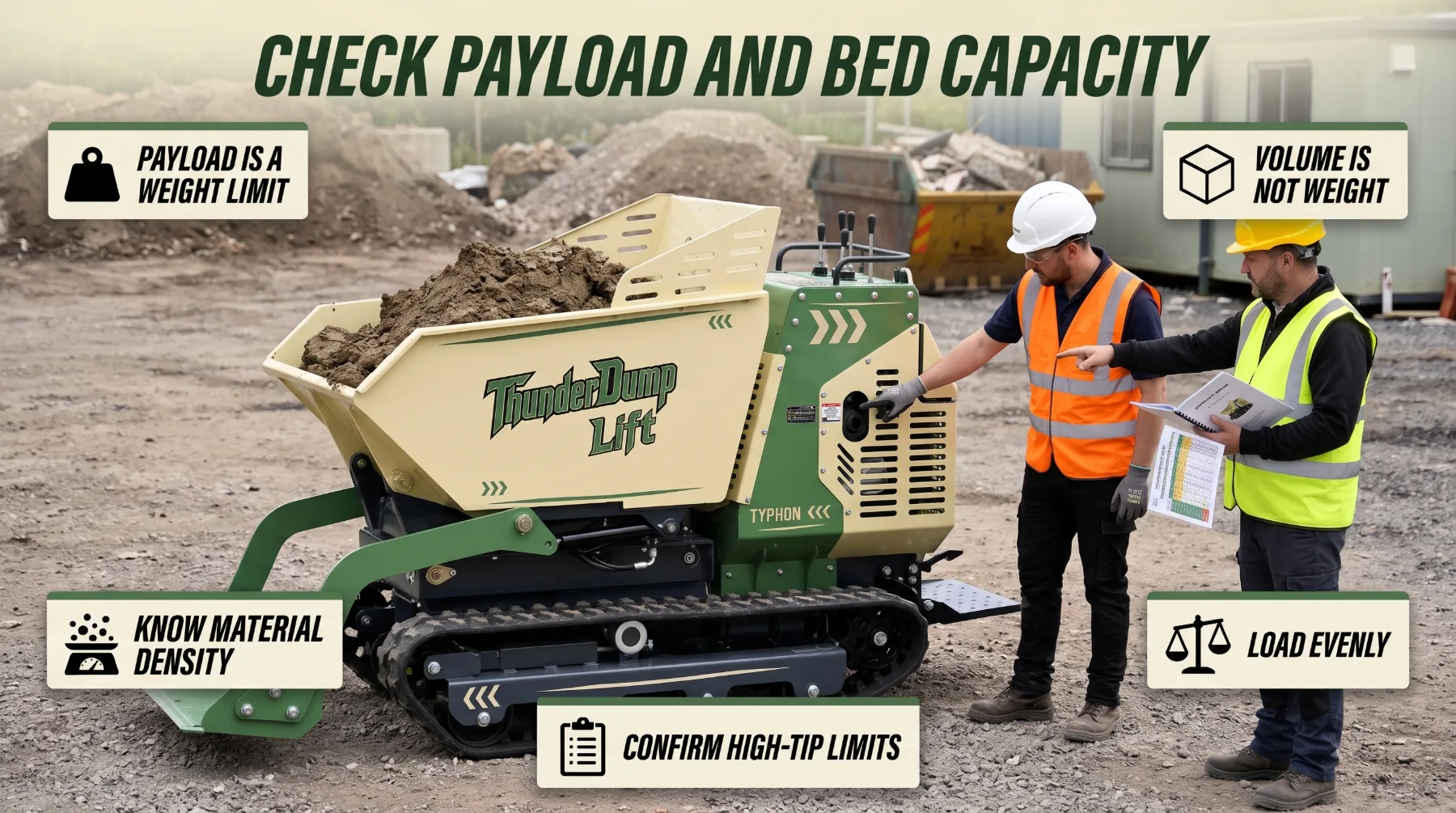
A simple example shows how quickly this happens. Suppose a compact high-tip dumper has a heaped bed capacity of about half a cubic yard and a rated payload of 1,100 pounds. Wet soil and gravel commonly weigh somewhere around 2,500 to 3,000 pounds per cubic yard. Half a cubic yard of wet soil at 2,800 pounds per cubic yard weighs about 1,400 pounds, well beyond the rating, even though the bed looks only normally full. With dense materials, a partly filled bed may be the correct load. Know the approximate density of the materials your crews move most often, and train operators to load by weight rather than by appearance. Some contractors mark a fill line inside the bed for common heavy materials as a simple visual guide.
Never exceed the rated payload to save a trip. Overloading strains the hydraulic system, brakes, and drivetrain, reduces steering and braking control on slopes, and sharply increases the risk of tipping during lifting. A few extra trips each day cost far less than a damaged machine or an injured crew member.
Key takeaway: Rated payload is a weight limit, not a volume measurement. Know your material densities, load evenly and by weight, and confirm any reduced payload or configuration-specific restrictions for high-tip discharge in writing.
Consider Site Access and Positioning
High-tip dumpers are often chosen precisely because they reach places larger machines can't. That advantage only holds when the machine fits the route, turns where it needs to, and stops in exactly the right spot beside the container. Comparing the dumper's dimensions with the available work area before the job begins prevents wasted trips, surface damage, and unsafe improvisation at the discharge point.
Length and turning radius come next. A longer machine sweeps a wider path through corners, and the raised lift frame on some high-tip designs adds length at the front. Ask the manufacturer whether the published turning radius is an inside, outside, or overall figure, and whether it includes the bed. Tracked models that counter-rotate can turn in very tight spaces, but they can scuff turf, scrape pavers, and churn soft ground. Lay ground protection mats over lawns and finished surfaces, and plan wider, gradual turns where surfaces need protection.
Ground clearance affects how well the machine handles thresholds, curbs, ramps, and uneven ground. Low clearance can cause the chassis to ground on a threshold or the crown of a path, leaving the machine stuck or unstable. Check steps, door sills, and ramp transitions along the route, and use approved ramps or boards where needed. Confirm that any ramp can safely support the loaded weight of the machine. Check overhead clearance too. Raised beds and lift frames can reach well above head height, so look for eaves, branches, signs, scaffolding, and power lines at the discharge position. Maintain the clearance distances from overhead lines required by applicable regulations and the utility owner.
Separate people from the route and the container area. Mark travel paths with cones or barriers, keep ground workers out of the machine's path, and agree on hand signals before work begins. On public streets and sidewalks, follow your permit conditions and traffic control plan, and protect pedestrians with rigid barriers and a safe alternate route where needed. Use a trained spotter when visibility is limited or the route passes close to people, vehicles, or structures.
Key takeaway: Compare overall width, length, turning radius, ground clearance, and overhead clearance with every opening and corner on the route, then mark a firm, level discharge position where the dumper can line up and leave the container safely.
Follow Safe Unloading Procedures
Unloading is the most hazardous stage of the high-tip cycle. A loaded bed raised high above the ground moves the machine's center of gravity upward and closer to the edge of its stability base. Small problems that wouldn't matter at ground level, such as a slight slope, a soft patch, or an uneven load, can become a tip-over once the bed is lifted. A consistent, disciplined unloading procedure protects the operator, ground crews, and the public.
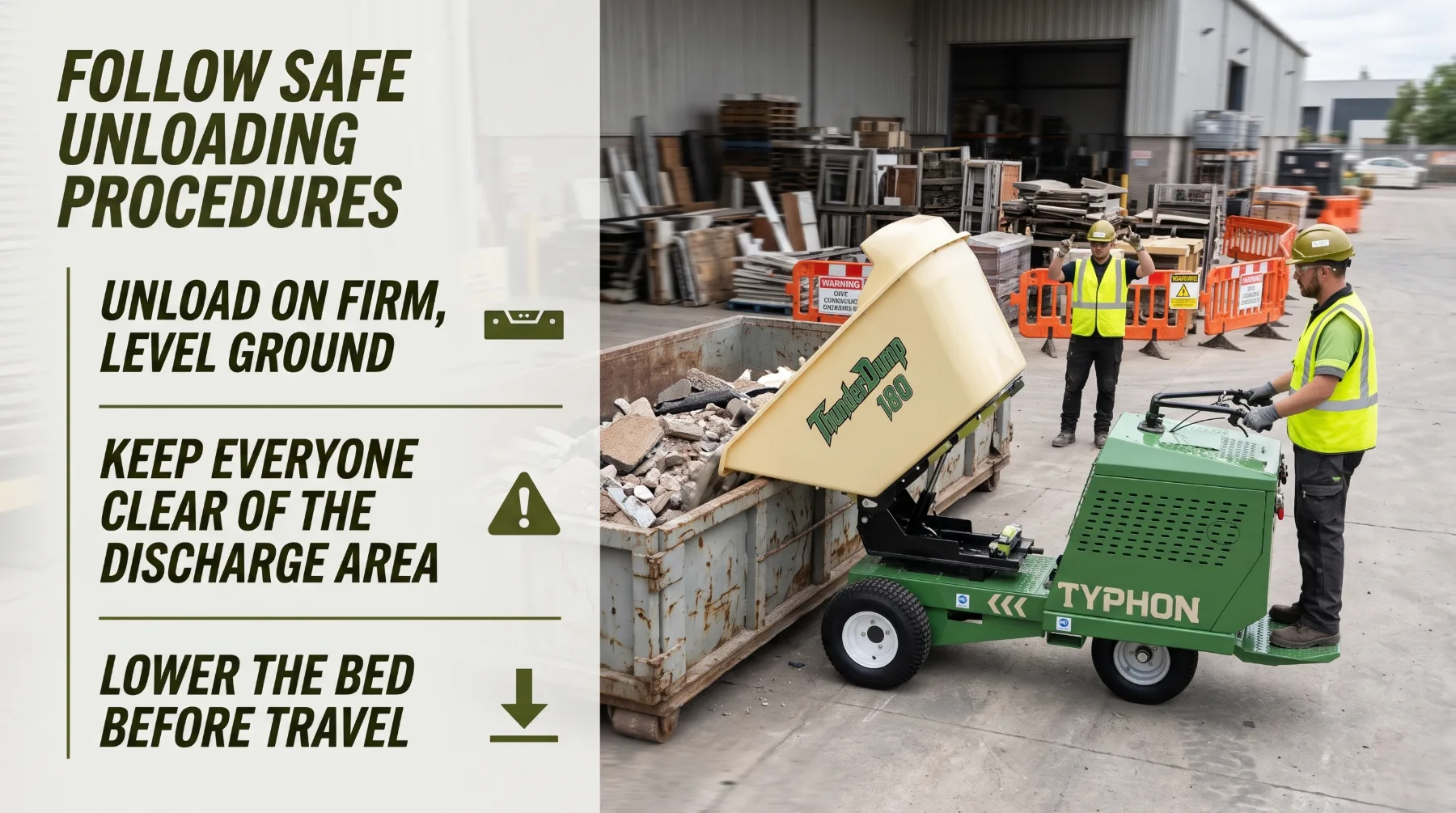
Raise the bed smoothly. Operate the lift and tip controls with steady, gradual movements rather than sudden inputs. Lift first, confirm that the machine remains stable and the bed is positioned over the container, then tip in a controlled motion. Watch the load as it releases. Sticky clay and wet soil can cling to the bed and then drop as a single mass, which can jolt the machine. Never jerk the controls, bounce a raised bed, or drive the machine back and forth to shake material loose. If material sticks, lower the bed and clear it with the machine shut down and the bed supported according to the manual.
Avoid moving with the bed elevated. Traveling with a raised bed sharply reduces stability and can cause the machine to overturn on even a small bump or slope. It also risks striking overhead hazards, scaffolding, and the container itself. Complete the discharge, return the bed to its fully lowered and tipped-back position, and confirm it's secure before moving. Lower the bed fully before traveling, every time, as the operator's manual directs.
Key takeaway: Unload only on firm, level ground within the manufacturer's slope limits, keep everyone clear of the discharge area, raise and tip the bed smoothly, and lower it fully before traveling. Never work beneath a raised bed unless it's properly supported.
Evaluate Hydraulic Maintenance
The hydraulic system is what makes a high-tip dumper different from a standard machine, and it carries the full weight of every raised load. Lift and tip cylinders, hoses, fittings, valves, and controls work under high pressure, flex with every cycle, and sit exposed to mud, dust, and debris. A well-maintained system lifts smoothly and holds the bed steady. A neglected one can leak, drift, or fail at the worst possible moment.
Prepare the machine safely before any inspection. Park on firm, level ground, lower the bed fully, set the parking brake, shut down the engine, and remove the key. If an inspection requires the bed to be raised, engage the manufacturer's bed support prop or safety device first. Relieve hydraulic pressure according to the operator's manual before loosening any fitting. Some systems retain pressure after shutdown, so follow the specified procedure exactly.
Inspect the lift and tip cylinders closely. Look at each cylinder rod for scoring, pitting, rust, and bends, since a damaged rod tears the seals each time it retracts. Check for oil leaking down the rod or collecting at the cylinder gland. Inspect cylinder mounting pins, bushings, and brackets for looseness, wear, and cracks, along with the welds on the lift frame and bed pivot points. Grease pins and pivot points at the intervals the manufacturer specifies.
Follow the recommended hydraulic service schedule. Check fluid level and condition daily using the manufacturer's procedure, which usually requires the bed to be fully lowered. Use only the specified fluid type and grade. Milky fluid can indicate water contamination, foamy fluid can signal air entering the system, and dark fluid or a burnt smell can point to overheating. Replace hydraulic filters at the scheduled intervals, and follow severe-duty guidance for dusty or muddy conditions. Wipe fill caps and fittings clean before opening them, and keep new fluid sealed until use. Use only replacement hoses, fittings, and seals that meet the manufacturer's specifications.
Key takeaway: Inspect lift and tip cylinders, hoses, fittings, and controls for leakage or damage before each shift, follow the hydraulic service schedule, investigate any slow, uneven, or drifting bed movement, and tag out defective machines until a qualified technician repairs them.
Conclusion
High-tipping dumpers make it easier to load skips and transfer materials into elevated containers with fewer handling steps. Safe and efficient operation depends on matching the machine to the job. Discharge height, dump reach, and tipping angle must provide enough clearance for the intended container, while payload limits must account for material density and any restrictions associated with the tipping method. The dumper must also suit site access, turning space, and ground conditions. Stable positioning, consistent unloading procedures, and regular hydraulic system maintenance help ensure reliable performance. When evaluating a dumper, consider the container sizes, access widths, turning areas, and overhead clearances common to your projects. Check the discharge height, dump reach, rated payload, tipping limitations, and overall dimensions for the exact configuration. A practical demonstration with a loaded bed and suitable container can confirm whether the machine meets your operating requirements. Train operators on safe unloading procedures and routine hydraulic inspections. Proper selection and operation help improve material handling efficiency, reduce equipment wear, and maintain a safer worksite.
Frequently Asked Questions
What is a high-tipping dumper used for?
It is used to discharge material into elevated skips, roll-off containers, hoppers, and other receiving areas within its rated limits. High-tip dumpers are especially valuable on restricted sites, such as rear extensions, interior demolition, and landscaping jobs, where there's no room for a loader to transfer material from a ground pile.
How do buyers check whether a dumper can load a skip?
Measure the skip's actual rim height and width on the side where the dumper will discharge. Compare those figures with the dumper's published discharge height, dump reach, and tipping angle, confirming the manufacturer's measurement reference point. Choose a machine that clears the rim with practical margin rather than matching it exactly.
Does high tipping increase the dumper's payload?
No. Payload remains subject to the machine's rated capacity, and some manufacturers specify a lower permitted payload for high-tip discharge than for standard tipping. Load by weight rather than volume, since dense materials such as wet soil, gravel, and broken concrete can exceed the rating before the bed looks full.
Should a high-tipping dumper travel with its bed raised?
No. Traveling with a raised bed sharply reduces stability and can cause a tip-over or contact with overhead hazards. Lower and secure the bed fully before travel, according to the operator's manual.