Road Roller Maintenance: Top 5 Fastest Wearing Parts
By Antigravity Machinery Team |
Published: October 3, 2026 |
Category: Equipment Guide
| 5 min read
What Parts of a Road Roller Wear Out the Fastest?
A road roller works hard for every hour it runs, pressing, vibrating, and grinding against some of the most demanding materials on any jobsite. That constant effort takes a toll, and certain parts of the machine feel it far sooner than others. Knowing which components wear out fastest helps you plan maintenance wisely, spot problems early, and keep the [roller working](https://www.machine2u.com/store) when you need it most. It also protects your investment, since catching wear before it turns into failure saves both money and downtime.
This guide walks through the parts of a road roller that wear out the fastest across five practical areas. You will learn how the drum surface and edges wear, how [vibration system](https://roadroller.org/road-roller-engine-power-vs-vibration-system-demand/) components hold up under repeated stress, why drum bearings and seals demand attention, how scrapers and water spray systems fare during frequent use, and what to watch for in the hydraulic and drive system. By the end, you will have a clear, dependable understanding of where wear concentrates and how to stay ahead of it.
Drum Surface and Drum Edges
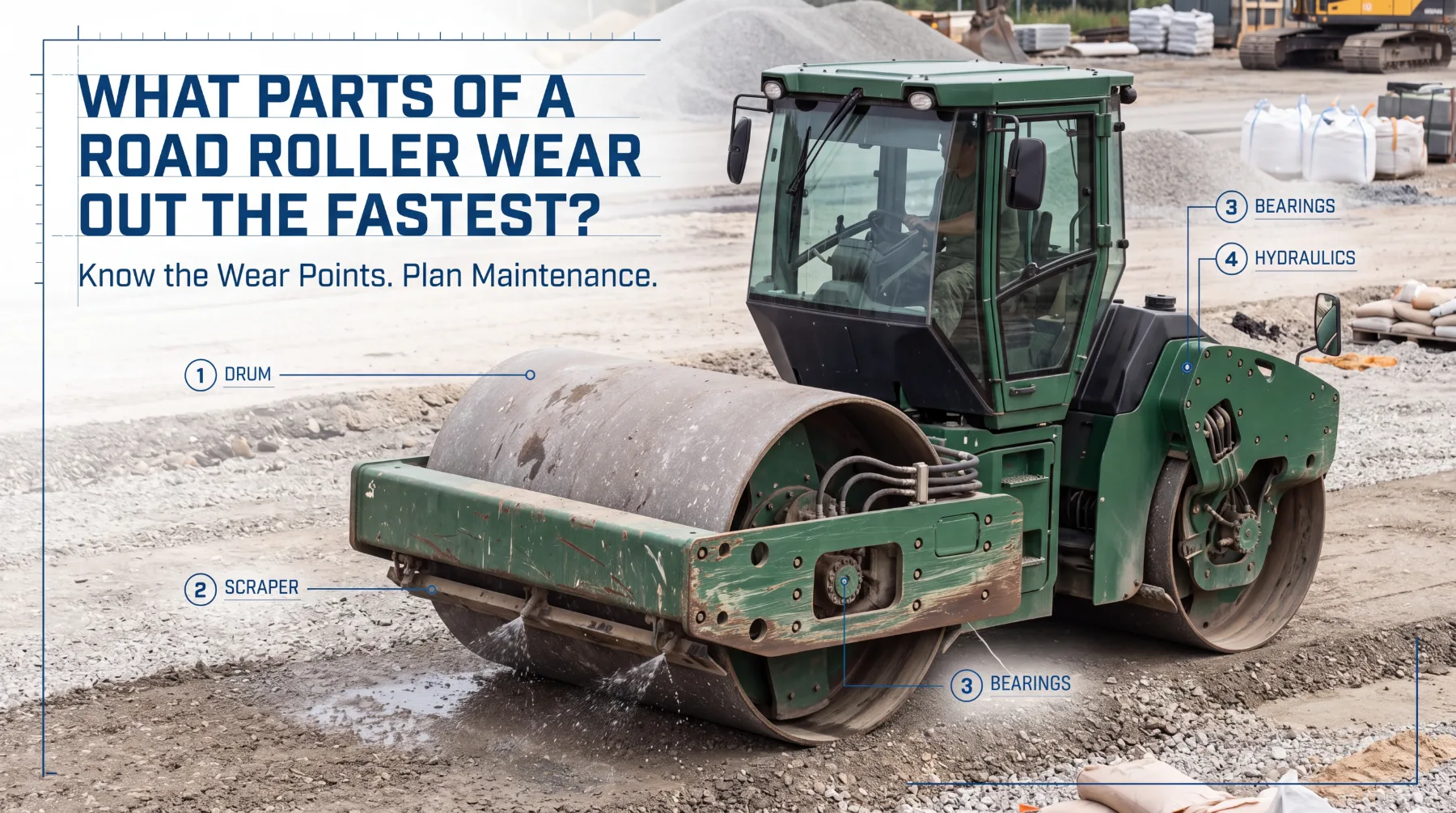
The drum is the working heart of a road roller, and it pays the price for that role. During operation, the drum is constantly exposed to asphalt, aggregate, dust, and vibration, all of which act on its surface with every pass the machine makes. Because the drum carries the machine's weight directly onto the material being compacted, it takes the full brunt of the abrasion, impact, and grit that compaction work involves. This relentless contact means the drum surface is among the first parts of the roller to show signs of wear.
That wear tends to concentrate on the surface and edges, and it develops faster under certain conditions. Working on abrasive materials or rough surfaces accelerates the process, since sharp aggregate and uneven ground grind against the drum more aggressively than smooth, fine material would. Over time, the surface can lose its smoothness, and the edges can wear or become damaged. A worn drum surface matters because it affects the quality of the finish the roller produces, so keeping an eye on its condition helps protect both the machine and the work it delivers.
Regular inspection of the drum is one of the simplest ways to stay ahead of this wear. Checking the surface for scoring, flat spots, or damage, and examining the edges for excessive wear, lets you catch problems while they are still manageable. Keeping the drum clean and clear of built-up material also helps preserve its condition and its finish quality. When you monitor the drum closely and address wear before it worsens, you extend the life of a component that works harder than almost any other part of the machine.
Vibration System Components
The vibration system is what gives a road roller much of its compaction power, and it earns its keep through constant, intense motion. Vibration-related components experience repeated high-frequency movement during compaction, and that steady stress makes them some of the fastest-wearing parts on the machine. Every second the vibration is engaged, these parts cycle through motion at a rapid pace, and the cumulative effect of that activity over a working day, week, and season adds up to significant demand on the components involved.
Several parts carry the load of this constant motion:
Bearings, which support the rotating and vibrating assembly under continuous high-frequency stress
Eccentric weights, which generate the vibration and endure the forces that come with it
Related drive components, which transmit power to the vibration system and cycle repeatedly during operation
Each of these parts is built to handle demanding work, but the sustained intensity of the vibration system means they wear faster than components that see gentler use.
The condition of these parts depends heavily on how well they are cared for. Bearings, eccentric weights, and related drive components can wear faster if lubrication or maintenance is inadequate, since proper lubrication is what protects them from the friction and heat that high-frequency motion generates. When lubrication runs low or maintenance is neglected, wear accelerates and the risk of failure climbs. Following the manufacturer's maintenance schedule, keeping components properly lubricated, and inspecting the vibration system regularly all help these parts reach their full service life. Giving the vibration system the attention it deserves keeps the roller compacting reliably and protects components that are central to its performance.
Drum Bearings and Seals
Regular scraper blade adjustment prevents asphalt buildup and drum gouging.
Drum bearings do essential, demanding work, and that makes them a common wear point on a road roller. These bearings support the rotating drum and operate under significant loads, carrying the weight of the machine while the drum turns and vibrates against the ground. Because they bear such heavy, continuous demands, drum bearings are among the components that wear out fastest, and their condition has a direct effect on how smoothly and reliably the roller operates.
The seals that protect these bearings play a quiet but critical role in how long they last. Seals keep contaminants such as dust, dirt, and moisture out of the bearing, and they keep lubrication where it belongs. When those seals wear or become damaged, that protection breaks down. Worn or damaged seals can allow contaminants to enter and reduce bearing service life, since grit and moisture inside a bearing accelerate wear dramatically. A small seal problem can therefore lead to a much larger and more costly bearing failure if it goes unnoticed.
This connection between seals and bearings is why both deserve regular attention during maintenance. Inspecting the seals for signs of wear or damage, watching for leaking lubrication or contamination around the bearings, and listening for unusual noise from the drum can all help you catch trouble early. Addressing a worn seal promptly protects the bearing behind it and spares you the greater expense and downtime of a failed bearing. When you keep the seals sound and the bearings properly maintained, you protect a part of the machine that works under constant load and keeps the drum turning as it should.
Scrapers and Water Spray Components
Check rubber isolators for cracks, tearing, and oil degradation to protect the operator.
Keeping the drum clean is essential during paving, and two systems work together to make that happen. Drum scrapers remain in contact with the drum surface to prevent asphalt buildup, while water spray systems help keep the drum wet and clean so material does not stick to it. Both systems are in constant use during operation, and that steady duty means they experience wear, clogging, or damage during frequent use. Because they work so continuously, they are among the parts that need regular attention to keep performing their job.
Scrapers wear because they are designed to stay in contact with the drum, riding against its surface to keep it clear. That constant contact gradually wears the scraper down, and a worn scraper becomes less effective at removing material, allowing asphalt to build up on the drum. Water spray systems face their own challenges, since the nozzles, lines, and filters that deliver water to the drum can become clogged over time, particularly by debris or mineral buildup. A blocked spray system fails to keep the drum properly wetted, which lets material stick and undermines the quality of the finish.
Keeping both systems in good order is a matter of routine care. Checking scrapers for wear and adjusting or replacing them as needed keeps them working against the drum effectively. Inspecting the water spray system for clogs, cleaning or clearing nozzles and filters, and confirming that water flows evenly across the drum all help the system do its job during paving. These are relatively simple tasks, but they matter a great deal to the quality of the work, since a clean drum produces a cleaner finish. Staying on top of scraper and spray maintenance keeps the roller ready to deliver the results your paving work depends on.
Hydraulic and Drive System Components
The hydraulic and drive systems power the roller's movement and functions, and the components within them face demanding conditions throughout every shift. Hydraulic hoses, fittings, motors, and drive components are exposed to pressure, vibration, and repeated operating cycles, all of which place steady stress on the parts involved. The combination of high hydraulic pressure and the constant vibration of compaction work is particularly hard on hoses and fittings, which is why these systems include components that wear and require attention over time.
Hydraulic hoses and fittings deserve close attention because they carry pressurized fluid throughout the machine. Vibration and pressure cycles can gradually weaken hoses, leading to cracks, chafing, or leaks, while fittings can loosen or wear at their connections. A hydraulic leak reduces the system's performance and, if left unaddressed, can lead to larger problems. Motors and drive components carry their own demands, since they work continuously to move the machine and drive its functions, and they experience wear through the repeated cycles of daily operation.
Staying ahead of this wear comes down to consistent inspection. Regular inspection can help identify leaks, damaged hoses, and worn components before they affect roller performance, which is the key to avoiding unexpected breakdowns. Checking hoses for cracks, chafing, or signs of leaking, confirming that fittings are secure, and watching for changes in how the drive system performs all help you spot developing problems early. When you inspect the hydraulic and drive systems routinely and address wear as it appears, you keep the roller moving dependably and protect it from the failures that neglected components can cause.
Conclusion
A road roller concentrates wear in the parts that work hardest, and knowing where to look keeps you a step ahead of trouble. The drum surface and edges take constant abrasion from asphalt, aggregate, and rough ground. The vibration system endures relentless high-frequency motion that demands proper lubrication. Drum bearings carry heavy loads and rely on sound seals to keep contaminants out. Scrapers and water spray components stay in constant use to keep the drum clean, and the hydraulic and drive systems face steady pressure and vibration throughout every shift.
Staying ahead of this wear is largely a matter of routine, attentive maintenance. Inspect the drum, vibration system, bearings, seals, scrapers, spray system, and hydraulic components regularly, keep everything properly lubricated, and address small problems before they grow into costly failures. When you understand where a road roller wears fastest and give those parts the care they need, you protect both the machine and the quality of your work, keeping the roller ready to perform shift after shift. Reach out to discuss which road roller and maintenance support best suit your compaction work.
Frequently Asked Questions
1. Which part of a road roller wears out the fastest?
No single part wears fastest in every situation, since it depends heavily on how and where the roller is used, but the drum surface is often among the first to show significant wear. The drum is constantly exposed to asphalt, aggregate, dust, and vibration, and because it presses the machine's weight directly onto the material being compacted, it takes the full brunt of abrasion and impact with every pass. Working on abrasive materials or rough surfaces accelerates this wear noticeably, as sharp aggregate and uneven ground grind against the drum more aggressively than smooth, fine material would. Other parts wear quickly too, particularly the vibration system components that endure constant high-frequency motion and the drum bearings that operate under significant loads. The parts that wear fastest are generally those exposed to the most demanding, continuous stress. This is why regular inspection across the drum, vibration system, bearings, and other hard-working components is so valuable, since it lets you catch wear early wherever it develops and address it before it turns into a larger, more costly problem.
2. Why do vibration system components wear so quickly?
Vibration system components wear quickly because they experience repeated high-frequency movement during compaction, which places intense and continuous stress on them. Every second the vibration is engaged, parts such as the bearings, eccentric weights, and related drive components cycle through motion at a rapid pace, and the cumulative effect of that activity over hours, days, and seasons adds up to substantial demand. These parts are built to handle demanding work, but the sheer intensity and constancy of the vibration mean they naturally wear faster than components that see gentler use. Lubrication and maintenance play a decisive role in how long these parts last. Bearings, eccentric weights, and related drive components can wear much faster if lubrication or maintenance is inadequate, since proper lubrication protects them from the friction and heat that high-frequency motion generates. When lubrication runs low or maintenance is neglected, wear accelerates and the risk of failure climbs. Following the manufacturer's maintenance schedule, keeping the components properly lubricated, and inspecting the vibration system regularly all help these parts reach their full service life and keep the roller compacting reliably.
3. How do damaged drum seals affect bearing life?
Damaged drum seals affect bearing life significantly because the seals are what protect the bearings from contamination and keep lubrication where it belongs. Drum bearings support the rotating drum and operate under significant loads, carrying the weight of the machine while the drum turns and vibrates. The seals guard these hard-working bearings by keeping out dust, dirt, and moisture. When those seals wear or become damaged, that protection breaks down, and contaminants can enter the bearing. Grit and moisture inside a bearing accelerate wear dramatically, so worn or damaged seals can sharply reduce bearing service life. This is why a seemingly small seal problem can lead to a much larger and more expensive bearing failure if it goes unnoticed. The practical response is to inspect the seals regularly for signs of wear or damage, watch for leaking lubrication or contamination around the bearings, and listen for unusual noise from the drum. Addressing a worn seal promptly protects the bearing behind it and spares you the greater expense and downtime that a failed bearing would cause.
4. Why do scrapers and water spray systems need frequent attention?
Scrapers and water spray systems need frequent attention because both are in constant use during paving and can experience wear, clogging, or damage as a result. Drum scrapers remain in contact with the drum surface to prevent asphalt buildup, and that constant contact gradually wears them down. A worn scraper becomes less effective at removing material, which allows asphalt to build up on the drum and affects the quality of the finish. Water spray systems help keep the drum wet and clean so material does not stick, but the nozzles, lines, and filters that deliver the water can become clogged over time, particularly by debris or mineral buildup. A blocked spray system fails to keep the drum properly wetted, letting material stick and undermining the finish. Keeping both systems in good order is straightforward but important. Checking scrapers for wear and adjusting or replacing them as needed keeps them working effectively, while inspecting the spray system for clogs, cleaning the nozzles and filters, and confirming even water flow keep the drum clean. A clean drum produces a cleaner finish, so this routine care directly supports the quality of your paving work.
5. What should I inspect in the hydraulic and drive system?
In the hydraulic and drive system, you should focus your inspection on the hoses, fittings, motors, and drive components, since these are exposed to pressure, vibration, and repeated operating cycles that cause wear over time. Hydraulic hoses deserve particular attention because vibration and pressure cycles can gradually weaken them, leading to cracks, chafing, or leaks. Check hoses for these signs of damage, and confirm that fittings are secure and not loosening or wearing at their connections, since a hydraulic leak reduces performance and can lead to larger problems if left unaddressed. Motors and drive components should also be monitored, as they work continuously to move the machine and drive its functions and experience wear through repeated daily cycles. Watch for changes in how the drive system performs, as these can signal developing wear. Regular inspection is the key, since it helps identify leaks, damaged hoses, and worn components before they affect roller performance and cause unexpected breakdowns. When you inspect these systems routinely and address wear as it appears, you keep the roller moving dependably and protect it from the failures that neglected components can cause.