Scissor Lift Platform Extensions and Their Benefits for Elevated Maintenance Work
Key Takeaways
- Maintenance standards
- Safe operation
- Field inspection guidelines
A maintenance technician at a commercial food packaging plant has to service a row of unit heaters and replace air filters in ceiling-mounted ventilation units. Every unit hangs above a long packaging line with guarded conveyors, wrapping machines, and product chutes. The scissor lift can't park beneath any of them. On the first day, he positions the lift beside the line, raises the platform, and finds each unit just beyond comfortable reach. He lowers the platform, moves the machine a few feet, raises it again, and repeats the process. By the end of the shift, only half the units are done, and his shoulders ache from stretching toward the work.
The next morning, the maintenance supervisor joins him before the shift starts. She shows him how to slide out the lift's extension deck with the platform lowered, confirm the lock has engaged, and check the overhead clearance around the extended section. With the deck over the packaging line, he can stand directly beneath two or three units from a single position. He keeps the replacement filters and his heavy toolbox on the main deck and carries only a small tool pouch onto the extension. The remaining units are serviced well before lunch, and the production team never has to stop the line.
Elevated maintenance often requires workers to reach areas beyond the edge of the main platform. Production lines, conveyors, equipment, racking, and fixed installations frequently keep a scissor lift from parking directly beneath the work. Many scissor lifts include an extension deck that slides outward from the main platform to add horizontal reach and working space. That feature helps maintenance crews reach overhead fixtures, piping, ventilation units, and building structures with fewer machine movements. Extension decks also carry specific load limits, locking requirements, and positioning considerations that every operator needs to understand.
Extended Reach Across Obstructed Work Areas
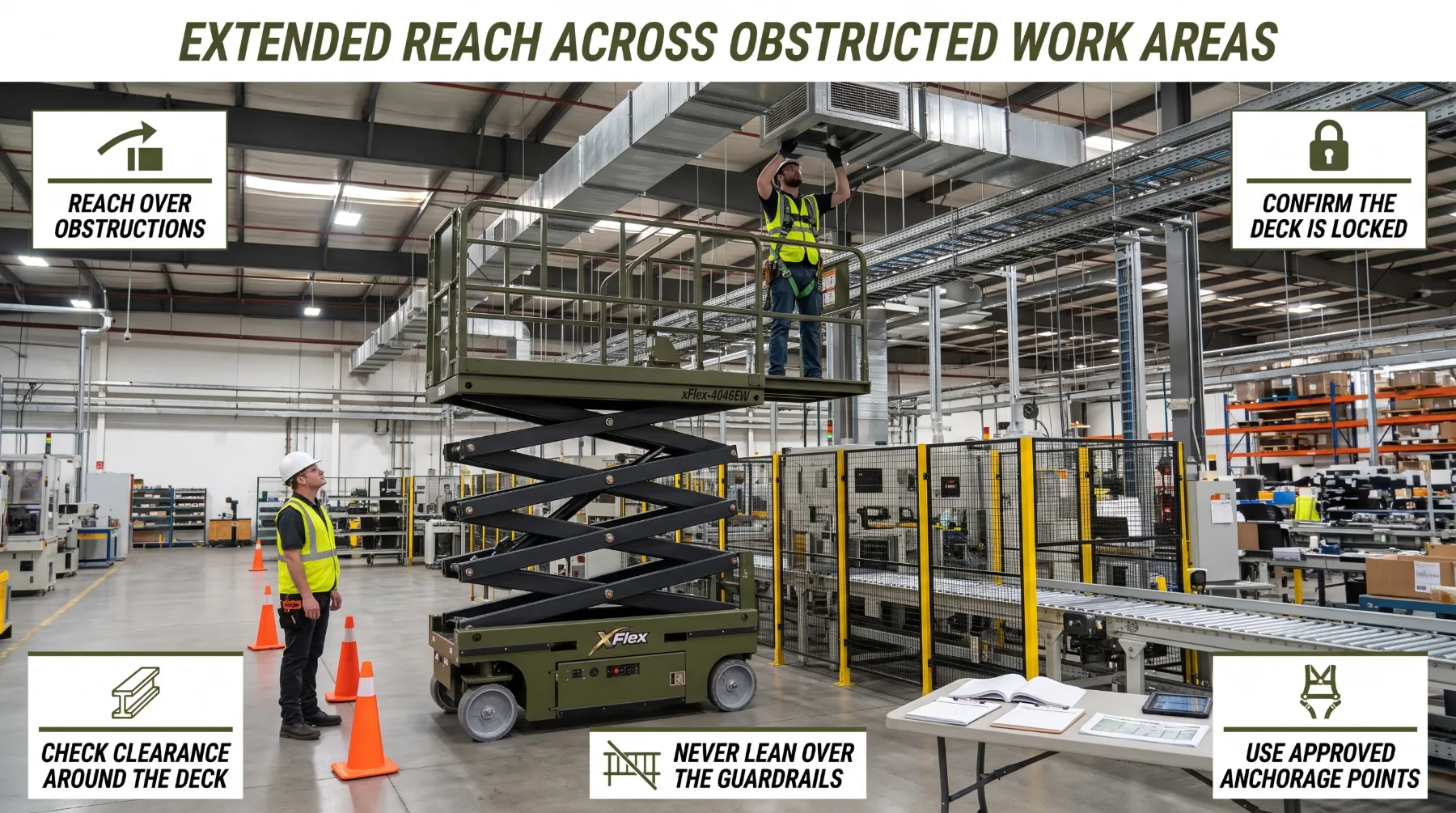
A platform extension adds horizontal access beyond the edge of the main deck. When an obstruction prevents the lift from parking under the work, the extension can bridge the gap. Conveyors, packaging lines, production machinery, pallet racking, and fixed equipment often sit between the floor area where the lift can travel and the overhead points that need service.
This reach changes how crews plan elevated tasks. Instead of searching for a way to park beneath every work point, operators can place the lift on a clear, level floor area and let the extension cover the remaining distance. In occupied facilities, that flexibility matters. Moving production equipment, stock, or machinery out of the way is rarely practical, and the extension often removes the need to do so.
Extended reach doesn't replace correct machine placement. The lift must still sit on a firm, level surface within the manufacturer's operating limits. The extension should bring the worker close enough to perform the task in a balanced, upright stance, without leaning over the guardrails. If a work point is still out of comfortable reach with the deck fully extended, lower the platform and reposition the machine.
Some work simply sits beyond what a scissor lift can reach, even with an extension. Large obstructions or work points far from any suitable floor position may call for a different type of aerial work platform. Choosing the right equipment starts with measuring how far out the work is, as well as how high.
Key takeaway: A platform extension bridges the gap between where the lift can park and where the work sits, but the machine still needs correct placement, and some jobs may require a different type of access equipment.
Additional Working Space for Tools and Materials
Extension decks add usable platform area as well as reach. That space can hold approved tools, replacement parts, and supplies close to the work. Electricians, HVAC technicians, fire protection specialists, and facility maintenance crews often need meters, hand tools, fasteners, and components within easy reach. A larger working area means fewer trips down to the floor for forgotten items.
Organization keeps that space safe and useful. Arrange tools and materials so they don't block movement on the deck or access to the platform controls and entry gate. Keep items inside the guardrails and away from the edges, where they could fall onto workers or equipment below. Tool lanyards, bins, and buckets designed for elevated work help contain small parts. Never hang tools, cords, or materials from the guardrails.
Where items go matters as much as how much they weigh. Heavy toolboxes, replacement motors, and boxes of components generally belong on the main deck, close to the center of the platform, unless the manufacturer states otherwise. Placing heavy items at the outer end of the extension shifts weight away from the machine's center. That can trigger overload systems or reduce stability.
Before raising the platform, look at the deck as a whole. Confirm that walkways are clear, materials are secured, and nothing extends beyond the platform's outline. A tidy, well-planned deck supports focused, efficient work at height.
Key takeaway: The extension adds valuable working space, so keep tools organized inside the guardrails, place heavy items on the main deck, and keep walkways and controls clear.
Reduced Machine Repositioning
Many maintenance tasks involve several nearby work points along a ceiling, wall, or equipment line. Without an extension, workers may need to lower the platform, drive a short distance, and raise it again for each point. Every cycle takes time, uses battery power or fuel, and creates more chances for contact with nearby objects. An extension deck can allow workers to reach several points from a single machine position.
That efficiency builds across a shift. Servicing a row of heaters, replacing a series of light fixtures, inspecting sprinkler heads, or re-terminating cables along a tray can often be completed with fewer machine moves. Less repositioning also means less disruption to the facility, since the lift spends less time traveling through busy aisles and occupies each work area for a shorter period.
Planning determines how much repositioning the extension can save. Before starting, walk the work area, identify every work point, and decide where the lift should park to cover as many as possible within comfortable reach. Most extension decks slide out from one end of the platform only. Position the machine so the extension points toward the work rather than away from it.
Some work points will still require the machine to move. When that happens, follow the manual's procedure, which may require retracting the extension and lowering the platform first. Never drive the lift while elevated unless the manufacturer permits it for that configuration. Never try to gain reach by leaning out from the guardrails or standing on them.
Key takeaway: An extension deck can let workers reach several nearby work points from one position, so plan machine placement around the direction the extension slides and reposition properly when work moves out of comfortable reach.
Extension Deck Load Limits and Overload Protection
Extension decks commonly carry a separate load rating from the main platform, and that rating is often lower. The extension is supported differently and places its load farther from the center of the machine. Manufacturers set extension limits to protect both the deck structure and the machine's overall stability. Both ratings appear on the capacity decals and in the operator's manual.
Operators must respect both limits at the same time. The load on the extension, including workers, tools, and materials, must stay within the extension rating. The total load across the entire platform must stay within the overall rated capacity. A load that's acceptable on the main deck can exceed the extension limit once it's moved outward.
Many scissor lifts include load-sensing or overload systems that warn the operator and restrict functions when the platform exceeds its rated capacity. These systems protect workers and the machine, and they must never be bypassed, disabled, or ignored. If an overload alarm sounds, stop and remove or redistribute the load as the manual directs. Confirm the alarm has cleared before continuing, and report any system that behaves unexpectedly.
Rated capacity can also change with operating conditions. Some lifts carry different ratings for indoor and outdoor use, and the permitted number of occupants may vary as well. Review the capacity decals for the specific configuration and environment before each job. Plan the load on the ground rather than adjusting it at height.
Key takeaway: The extension often carries a lower rating than the main platform, so keep both the extension load and the total platform load within their limits, and never bypass or ignore overload systems.
Safe Positioning Near Building Structures
An extended platform brings workers closer to walls, beams, ceilings, sprinkler pipes, ductwork, light fixtures, and other overhead obstacles. That closeness is the reason extensions are useful, but it also creates crushing and entrapment hazards. A worker leaning over the control box as the platform rises can be pinned between the guardrail and an overhead beam. Contact with sprinkler heads can damage fire protection systems and release water.
Careful approach reduces those risks. Before raising the platform, survey the full work area, including the space above and around the extended section. The extended deck occupies space the main platform doesn't, so check its entire outline. Raise the platform slowly as it nears overhead structures and stop well short of contact. Keep your head, hands, and body inside the guardrails, and stay aware of what's above you at all times.
Many lifts include secondary guarding or anti-entrapment devices, and these must work correctly before use. The floor matters as well. Confirm that it's firm, level, and free of holes, drains, debris, and slopes beyond the manufacturer's limits. Check floor load capacity on mezzanines and raised areas, use indoor-rated machines only indoors, and observe wind limits outdoors.
Protective equipment and site coordination complete safe positioning. Wear the fall protection the manufacturer or site rules require, attached only to approved anchorage points on the platform. Wear a hard hat where overhead hazards exist. Keep pedestrians and other equipment out of the work area with cones or barriers, and coordinate with production supervisors in active facilities. Only trained, authorized operators should run the lift, and they should complete familiarization on the specific model before using its extension deck.
Key takeaway: Extensions bring workers close to overhead structures, so check clearance around the full deck outline, raise slowly near obstacles, keep your body inside the guardrails, and wear required fall protection attached to approved anchorage points.
Locking Mechanisms, Inspection, and Maintenance
Extension decks rely on locking or retaining mechanisms to hold the deck securely in position. Depending on the design, these may include spring-loaded pins, locking pedals, or latches that engage at set positions. When engaged correctly, the lock keeps the deck from sliding unexpectedly while workers stand on it. A deck that doesn't lock securely shouldn't be used, and the machine should be tagged out of service until a qualified technician repairs it.
Daily inspection catches most problems early. With the platform lowered, slide the deck through its full range and confirm that it moves smoothly without binding or excessive play. Inspect the lock for wear, damage, debris, and full engagement at each position. Check slide rails and rollers for bent sections, missing fasteners, and buildup of dirt or paint. Confirm that guardrails, mid-rails, toe boards, and the entry gate on both the main deck and extension are secure. Keep hands and feet clear of the slide mechanism to avoid pinch points.
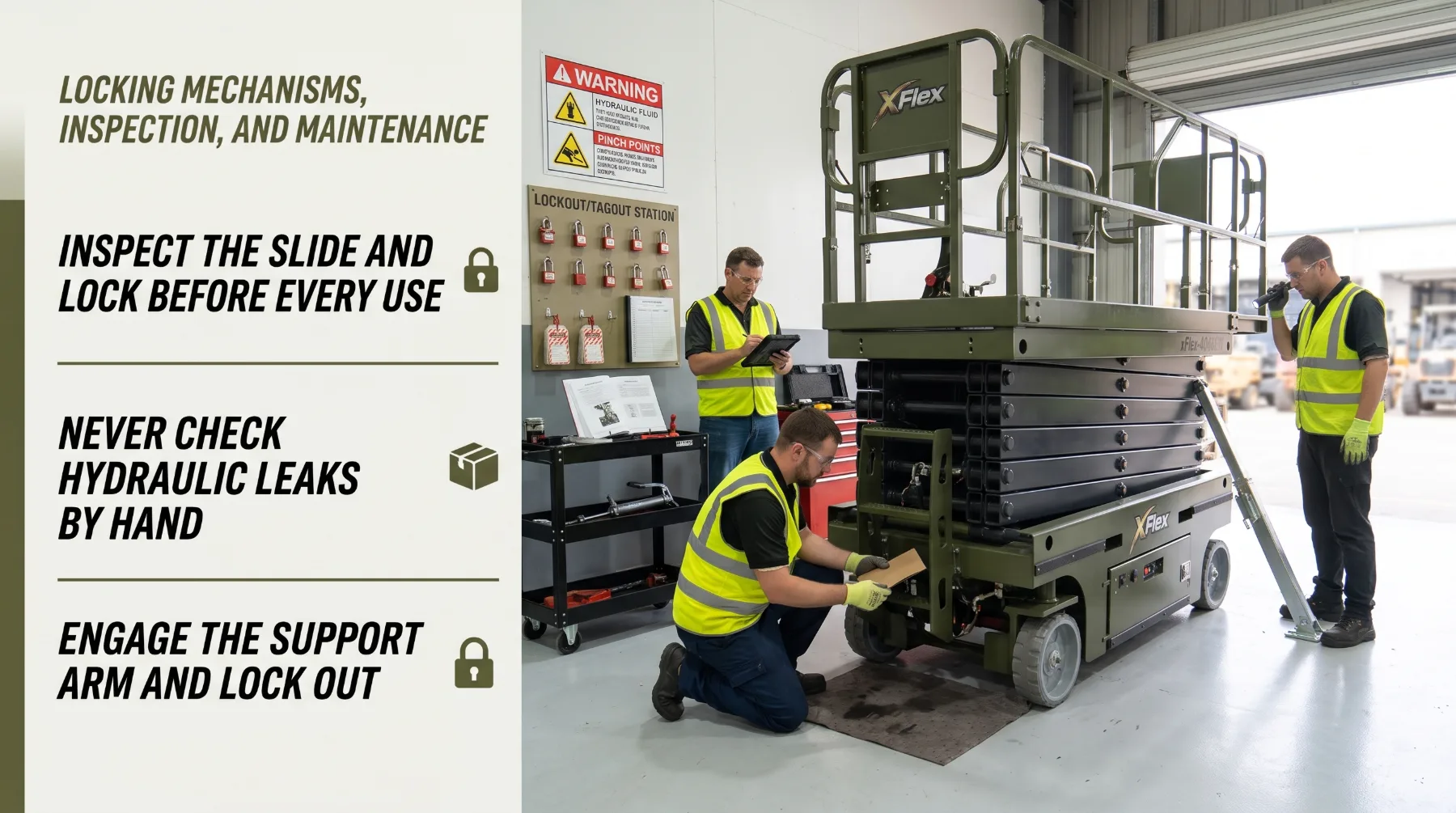
The rest of the pre-use check covers the whole machine. Inspect tires, pothole protection guards, platform controls, emergency stop and emergency lowering functions, capacity decals, and the battery or fuel system. Test all functions at ground level in a clear area. Look for hydraulic leaks around the lift cylinder, hoses, and fittings.
Hydraulic leak checks must be done safely. Never use your hand to search for a hydraulic leak. Fluid escaping through a pinhole under pressure can penetrate skin and cause an injection injury. The wound may look like a minor puncture at first, but it's a medical emergency that requires immediate surgical treatment. Hold a piece of cardboard or wood near the suspected leak point, wear gloves and eye protection, and keep your face and body out of line with the fitting. If anyone is struck by escaping fluid, get emergency medical care at once and tell medical staff it's a hydraulic injection injury.
Key takeaway: Inspect the extension slide, lock, rails, and guardrails before every use, check leaks with cardboard rather than your hands, and complete a full lockout with the maintenance support arm engaged before any service.
Conclusion
Platform extensions make elevated maintenance work more efficient by adding horizontal reach and usable deck space. They bridge the gap between where a scissor lift can park and where the work sits, keep tools and materials close to the task, and allow crews to service several work points from one machine position. Those benefits depend on correct placement, secure locking, careful load planning, and constant awareness of nearby structures.
Maintenance teams that understand both the advantages and the limits of extension decks get the most from them. Plan machine placement around the direction the extension slides, survey overhead clearance, and keep loads within both the extension and total platform ratings. Never bypass overload systems, wear required fall protection, and inspect the extension and lock before every use. Pair those habits with cardboard leak checks and complete lockout before service, and your crews can use every scissor lift extension safely and productively on every job.
Frequently Asked Questions
What is a scissor lift platform extension?
It's a movable section of the platform that slides outward from the main deck to add horizontal reach and working space. It allows workers to access work points beyond the machine's footprint, such as areas above conveyors, production equipment, or other obstructions.
Can the extension deck carry the same load as the main platform?
Not necessarily. The extension often has a separate, lower load rating. Operators must keep the load on the extension within its rating and the combined load across the entire platform within the overall rated capacity shown on the capacity decals.
Does an extension deck increase working height?
No. An extension deck increases horizontal reach, not vertical elevation. If a job requires more height, the crew needs a lift with greater platform height rather than a larger extension.
What should be inspected before using the extension deck?
Check the slide mechanism, rails, rollers, locking components, deck surface, guardrails, mid-rails, and toe boards. Confirm the load ratings on the capacity decals and survey overhead clearance around the full extended outline before raising the platform.