Understand High-Flow Hydraulics High-Flow Skid Steer Loaders for Forestry Mulchers and Cold Planers
Key Takeaways
- Maintenance standards
- Safe operation
- Field inspection guidelines
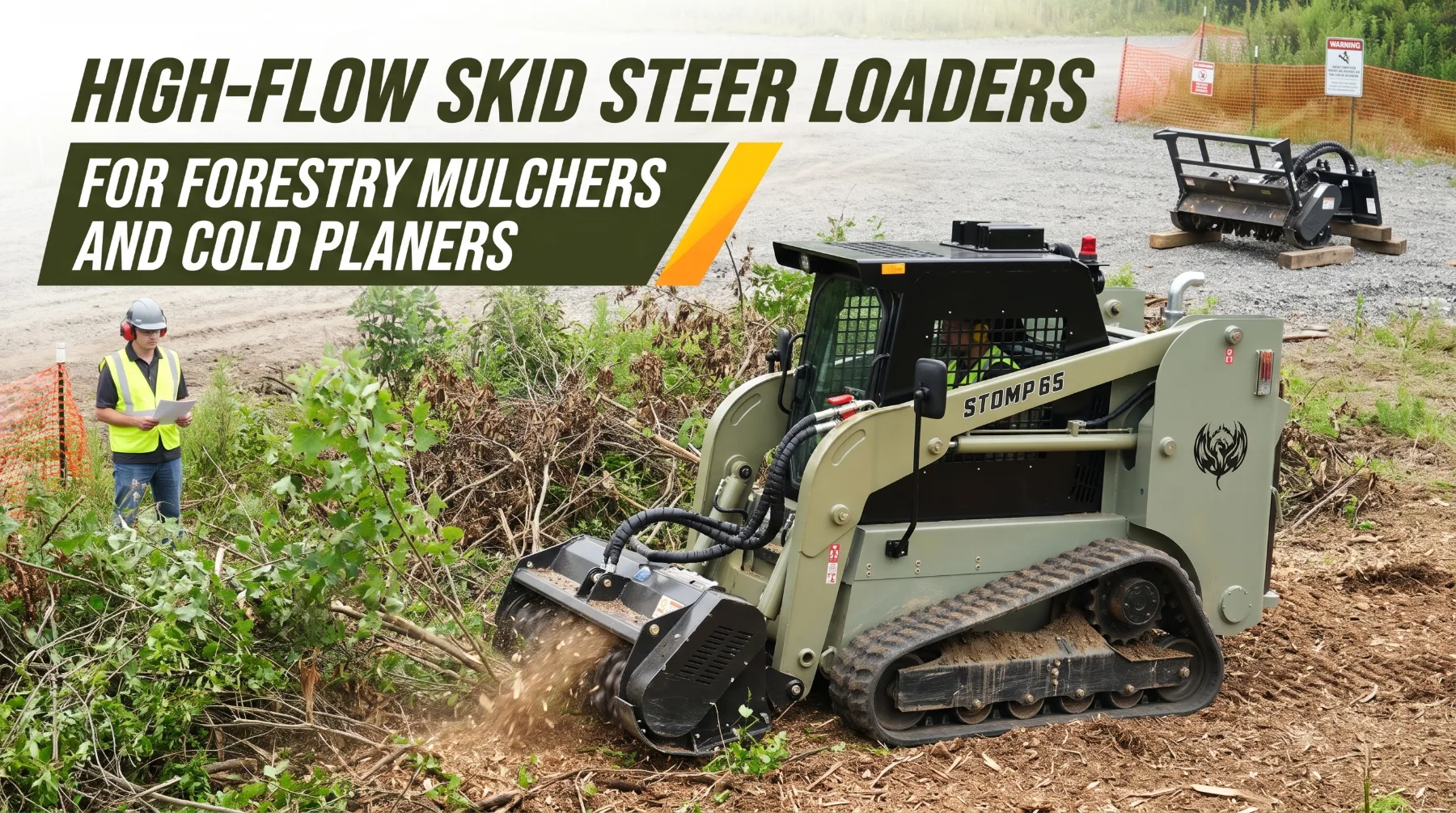
A land-management contractor wins two jobs in the same month. The first is clearing three acres of overgrown brush and saplings for a new subdivision. The second is milling a damaged section of a commercial parking lot before an overlay. The contractor rents a forestry mulcher and a cold planer and connects both to the company's newest skid steer. The machine has a strong engine and a high-flow auxiliary circuit. Within the first hour, the mulcher rotor bogs in hardwood saplings and the hydraulic temperature warning comes on. On the second job, the cold planer cuts slowly and leaves an uneven surface. The loader's high-flow figures were close to the attachment requirements on paper. Pressure, return restriction, a missing case-drain connection, and an undersized cooling package made the difference in the field.
Forestry mulchers and cold planers are two of the most demanding attachments a skid steer can run. Both use hydraulic motors that need large volumes of oil at the right pressure, often for hours without a break. A high-flow skid steer can supply the hydraulic capability these tools require. High flow alone does not guarantee compatibility, though. Buyers must also confirm pressure, return-line and case-drain requirements, cooling capacity, attachment weight, and carrier capacity. This guide explains each factor so you can build a dependable machine and attachment combination for clearing and milling work.
The auxiliary hydraulic circuit sends pressurized oil from the loader to the attachment and returns it to the tank. On most skid steers, the standard-flow circuit delivers roughly 17 to 25 gallons per minute (GPM), depending on machine size and model. That output runs a wide range of tools, including augers, grapples, trenchers, and most skid steer breakers. High-flow systems typically deliver roughly 30 to 45 GPM or more. Some manufacturers also offer enhanced or super high-flow packages that combine high flow with higher operating pressure.
Flow matters because it controls the speed of hydraulic motors. On a mulcher, flow sets rotor speed. On a cold planer, it sets drum speed. Both attachments depend on high rotational speed to cut efficiently. A mulcher rotor turning below its rated speed tears and shreds material instead of cutting cleanly, and it stalls more easily in larger stems. A cold planer drum turning too slowly leaves a rough, inconsistent surface and loads each tooth more heavily.
High-flow capability usually comes as a factory package. It includes a larger or additional pump, larger hoses and couplers, and an upgraded cooling system. It also requires an engine with enough reserve to supply the added hydraulic load while still powering travel and cooling. Many high-flow loaders include power management or anti-stall features that adjust hydraulic demand to keep the engine in its working range. Ask how those systems behave under sustained attachment load, since mulching and milling keep demand high for long periods.
Key takeaway: High-flow systems deliver substantially more oil per minute than standard flow, which supports motor-driven attachments like mulchers and cold planers. Evaluate flow, pressure, and engine reserve together.
Check Pressure and Return-Line Needs
Flow is the figure buyers check first, but it is not enough to establish compatibility. A loader can match a mulcher's flow requirement and still deliver poor performance if pressure, return restriction, or drain connections don't match the attachment's design.
Start with operating pressure. The loader's auxiliary relief valve setting determines the maximum pressure the circuit can deliver. Compare that setting with the attachment manufacturer's rated pressure range. Pressure below the range reduces torque at the motor, so the rotor or drum slows sharply when it meets dense wood or hard pavement. Pressure above the rating can overload motor seals, hoses, and fittings. Two loaders with identical flow can deliver very different hydraulic horsepower if their pressure settings differ.
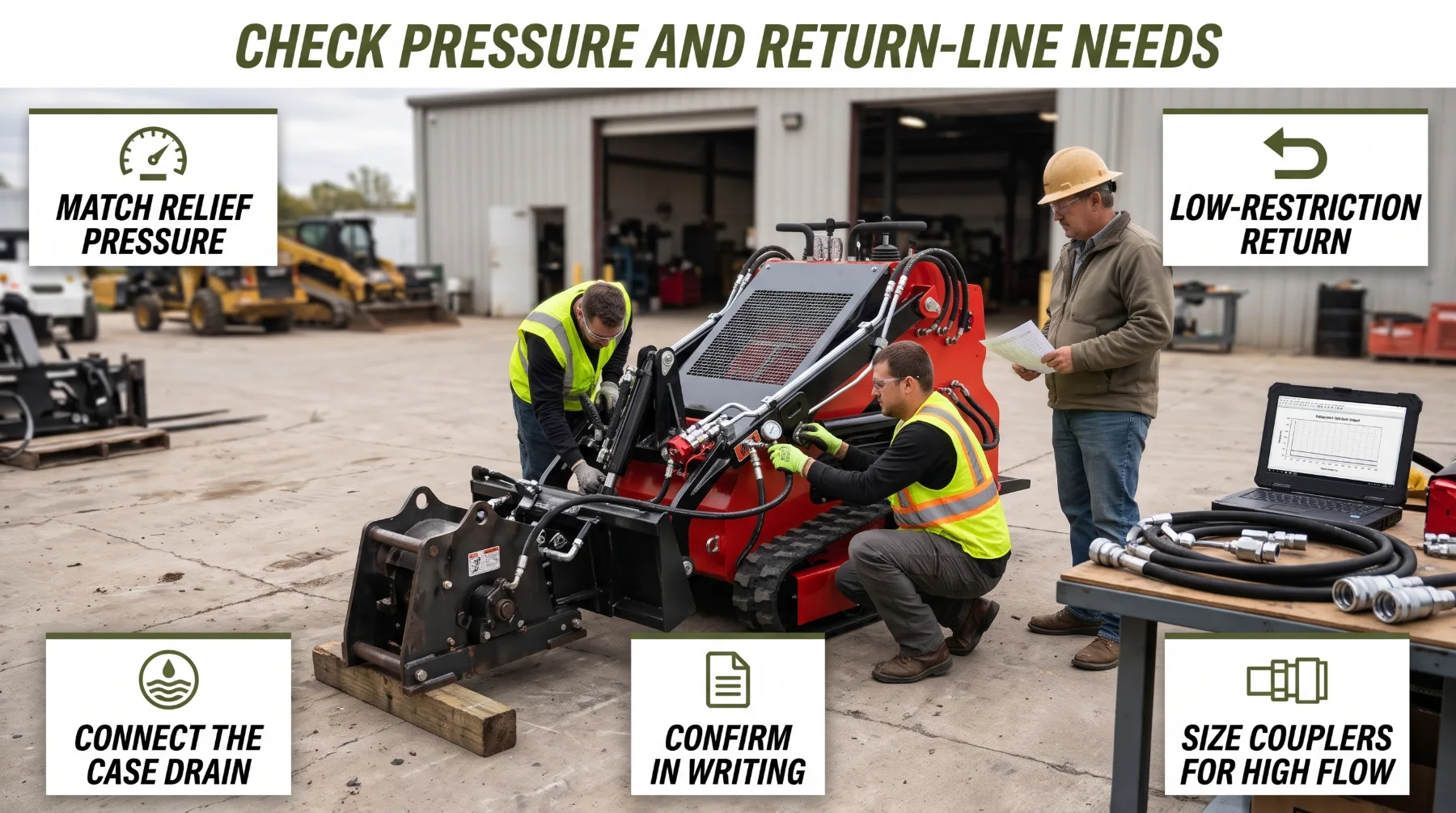
Return-line restriction comes next. Oil leaving the attachment's motor must flow back to the tank freely. Long hose runs, undersized hoses, tight bends, and restrictive couplers raise return pressure. That back pressure reduces the effective pressure difference across the motor, which lowers torque and generates heat. Many high-demand attachments recommend or require a dedicated low-restriction return line. Confirm whether the loader provides one and whether the attachment's hose kit is sized for it.
Case-drain connections protect the motor. Hydraulic motors allow a small amount of internal leakage to lubricate and cool their components. That oil collects inside the motor housing, and a case-drain line gives it a separate, low-pressure path back to the tank. Motor case pressure limits are far lower than working system pressure. If the case drain is missing, blocked, or connected to the wrong port, pressure can build inside the housing and blow out the shaft seal. Many mulchers and cold planers require a case drain. Confirm that the loader has a matching port and connect it before starting the attachment.
Couplers and fittings complete the check. High-flow circuits typically use larger couplers than standard-flow circuits, and couplers must be the correct type and size for the flow involved. Undersized couplers restrict flow and add heat. Confirm that every coupler is clean, undamaged, and fully seated. Review any additional conditions the attachment manufacturer lists, such as electrical connections, control harnesses, or flow control requirements.
Key takeaway: Match relief pressure to the attachment's rated range, keep return restriction low, connect the case drain whenever required, and use couplers sized for high flow.
Compare Cold Planer Specifications
Cold planers remove asphalt or concrete surfaces to a controlled depth and width. Contractors use them for pothole repair, patching, utility cuts, removing high spots, milling around manholes and curbs, and preparing surfaces for overlay. A cutting drum fitted with carbide-tipped teeth rotates against the surface and grinds material into millings.
Hydraulic demand depends on several design factors. Drum width is the most visible. Skid steer cold planers commonly range from about 12 to 40 inches wide, and wider drums need more flow and power. Maximum cutting depth, often several inches in a single pass, affects resistance at the drum. Tooth count and pattern, motor type, and the material being cut all influence how much hydraulic energy the attachment uses. Concrete generally resists milling more than asphalt, and cold, hard asphalt cuts differently from asphalt on a warm day. Some smaller planers can run on standard flow, while larger models typically require high flow.
Many cold planers include depth control, tilt, and side shift. Some adjust these functions mechanically, while others use hydraulic cylinders controlled through an electrical harness and the loader's auxiliary controls. Confirm that the loader's electrical connector and control system support every function the planer uses. Side shift lets the operator mill close to curbs and walls without placing the loader against them. Tilt allows the drum to follow a crown or cross slope.
Structural compatibility matters as much as hydraulics. Confirm that the loader meets the attachment's carrier weight range and rated operating capacity requirements. A cold planer works best when the loader can hold the drum steady against cutting forces, since a carrier that is too light may bounce and produce an uneven cut.
Silica control is essential. Milling concrete, and asphalt containing silica-bearing aggregate, can release respirable crystalline silica. Use the water spray system where the planer is equipped with one, and follow applicable exposure requirements, such as the OSHA silica standard for construction in the United States. Keep cab doors closed, maintain cab filters, and provide respiratory protection when your exposure assessment requires it. Plan traffic control and pedestrian protection when milling on roads or in active parking areas.
Key takeaway: Cold planer demand depends on drum size, cutting depth, tooth design, and material. Confirm hydraulic, electrical, and structural requirements, and use water spray to control silica dust.
Consider Cooling and Machine Capacity
Mulchers and cold planers rarely cycle on and off the way a bucket or grapple does. They often run for long stretches at high demand, and that sustained load turns lost hydraulic energy into heat. Cooling capacity frequently decides whether a high-flow loader can run these attachments productively all day.
Heat affects hydraulic components in predictable ways. As oil temperature rises, the fluid thins and loses some of its ability to lubricate and seal. Internal leakage increases, efficiency drops, and the system produces even more heat. Over time, high temperatures harden seals, speed up fluid oxidation, and shorten the life of pumps, motors, and hoses. Ask the loader manufacturer whether the machine is rated for continuous-duty operation at high flow. Then compare that rating with the attachment's duty-cycle requirements. Many high-flow packages include larger hydraulic coolers and higher-capacity fans, and some offer reversing fans that blow debris out of the cooler at set intervals.
Jobsite conditions make cooling harder. Mulching fills the air with leaves, chips, and fine wood dust. Milling produces asphalt and concrete dust. Both can pack cooler and radiator fins quickly and cut airflow. Clean the cooling package at least daily on these jobs, and more often in heavy debris. Use the cleaning method the manufacturer recommends. Watch the hydraulic temperature gauge and warnings throughout the shift. If temperatures climb, reduce the load, let the system cool, and find the cause before continuing.
Machine capacity is the other half of this section. Mulchers and cold planers are heavy, and their weight counts against the loader's rated operating capacity. Under industry standards, rated operating capacity is commonly set at 50 percent of tipping load for wheeled skid steers and 35 percent for compact track loaders. A heavy attachment shifts the center of gravity forward, especially with the lift arms raised. That affects stability on slopes, soft ground, and uneven terrain. Confirm that the attachment falls within the carrier weight range the manufacturer approves.
Operate within the approved attachment and operating limits. Keep the attachment low during travel, travel straight up and down slopes rather than across them, and follow the manufacturer's slope guidance for heavy front-mounted tools. Compact track loaders are often preferred for mulching because their lower ground pressure and wider footprint improve traction and stability on soft or uneven ground.
Key takeaway: Confirm the loader is rated for continuous-duty high-flow work, keep coolers clean, and make sure attachment weight stays within the carrier's approved range and rated operating capacity.
Maintain the Complete Hydraulic System
A well-matched loader and attachment only stay well matched when the hydraulic system is maintained. High-flow attachments move large volumes of oil through pumps, motors, valves, and couplers with tight internal tolerances. Contamination, heat, and worn components reduce performance quickly and can lead to costly failures.
Start with the fluid and filters. Use only the hydraulic fluid type and grade the loader manufacturer specifies. Check the fluid level and condition daily according to the operator's manual. Milky fluid can indicate water contamination, dark fluid or a burnt smell can point to overheating, and foamy fluid can signal air entering the system. Replace hydraulic filters at the scheduled intervals. Many manufacturers recommend shorter intervals for continuous high-flow attachment work and dusty conditions, so follow the severe-duty guidance where it applies. Respond promptly to filter restriction indicators.
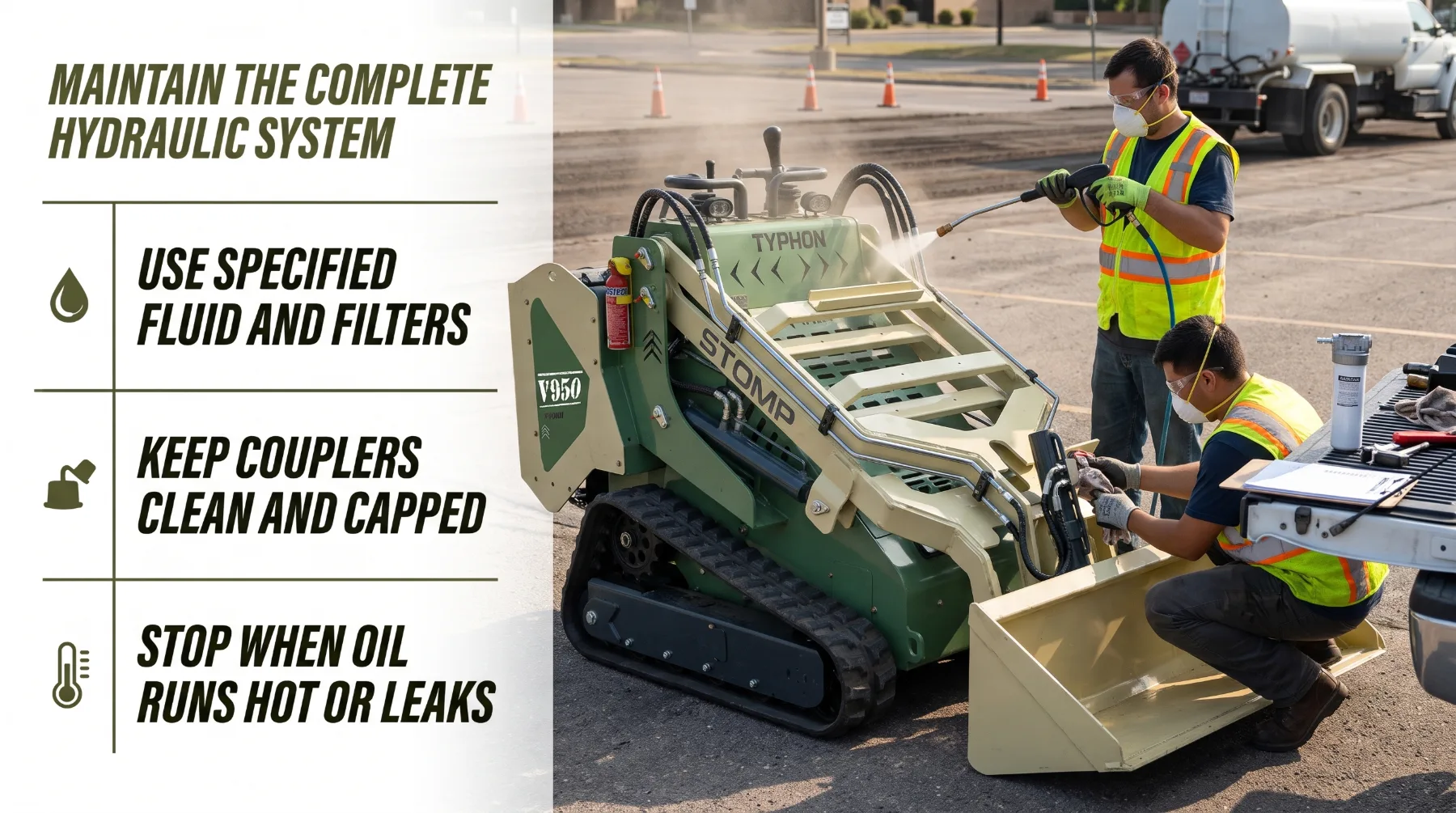
Couplers are a major contamination entry point. Wipe both halves clean before every connection, and cap or plug them when the attachment is removed. Relieve hydraulic pressure according to the operator's manual before connecting or disconnecting lines. Trapped pressure makes couplers hard to engage and can release oil forcefully. Inspect couplers for damage, leaks, and worn seals, and replace any coupler that doesn't seat fully.
Inspect hoses before every shift. Look for abrasion, cracks, bulges, kinks, and leaks at fittings. Check routing through the full range of lift arm movement, and protect hoses from contact with branches, stumps, and pavement edges. Confirm that the case-drain line is connected, undamaged, and unrestricted. Never use your hand to search for a leak. Pressurized fluid can penetrate skin and cause serious injury. Use a piece of cardboard or wood, and wear gloves and eye protection.
Maintain the attachment as carefully as the loader. Inspect mulcher teeth, holders, and bolts for wear and damage, and replace them with approved parts. On cold planers, check drum teeth, holders, and the water spray system. Grease attachment bearings and pivot points at the intervals the manufacturer specifies. In cold weather, follow the warm-up procedure before applying full load, since thick oil can starve pumps and motors.
Stop operation if the system overheats, leaks, makes unusual noise, or shows a sudden loss of performance. Have a qualified technician diagnose the cause before returning to work. Keep records of every fluid change, filter replacement, coupler repair, and attachment service. A complete history supports warranty claims, reveals recurring problems early, and strengthens resale value.
Key takeaway: Use specified fluid and filters, keep couplers clean and capped, inspect hoses and case-drain lines daily, maintain attachment wear parts, and stop work at the first sign of overheating or leakage.
Conclusion
High-flow skid steer loaders can operate forestry mulchers and cold planers effectively when their hydraulic and machine specifications match the attachments. High-flow systems provide the oil volume these motor-driven tools require, while pressure must remain within the attachment’s rated range. Low-restriction return lines, correctly sized couplers, and required case-drain connections support proper hydraulic operation. The loader’s cooling capacity must also handle continuous-duty work, and attachment weight must stay within approved limits and rated operating capacity. Check each attachment’s flow, pressure, return-line, case-drain, electrical, and carrier requirements against the loader’s specifications, including relief pressure and cooling capacity. Perform daily maintenance by checking hydraulic hoses, couplers, fluid levels, filters, cooling components, and attachment wear before operation. Request written compatibility confirmation for the exact models, then test the combination on representative material until it reaches normal operating temperature. This helps verify reliable performance while protecting the loader and attachment from unnecessary strain.
Frequently Asked Questions
Do forestry mulchers usually need high-flow hydraulics?
Many forestry mulchers require high flow, especially wider models built for heavy land clearing. Some smaller mulchers are designed for standard-flow carriers. The exact requirement depends on rotor design, cutting width, and motor type, so always check the attachment manufacturer's specified flow and pressure ranges.
Do cold planers need the same hydraulic flow as mulchers?
No. Requirements vary by attachment model, drum width, cutting depth, and motor design. Some smaller cold planers run on standard flow, while larger models need high flow. Compare each attachment's specifications with the loader individually.
Is high hydraulic flow enough to confirm compatibility?
No. Pressure, return-line restriction, case-drain connections, coupler size, electrical requirements, cooling capacity, and carrier weight and capacity must all match. A loader that meets the flow requirement can still underperform or damage the attachment if any of these factors don't align.
Why is hydraulic cooling important?
Mulchers and cold planers often run continuously at high demand, which builds heat in the hydraulic oil. Effective cooling keeps the oil within its operating range, protects seals, pumps, and motors, and maintains attachment performance. Clean coolers daily on debris-heavy and dusty jobs.